



Table of Contents
- What Makes School Clothes Comfortable
- Best Fabrics for Children's School Clothing
- Measuring Your Daughter for Accurate Sizing
- How to Build a School Capsule Wardrobe
- School Dress Code Compliance Tips
- Testing Durability and Washability Before Purchase
- Sensory Comfort and Special Considerations
- Frequently Asked Questions
Last Updated: September 26, 2026
What Makes School Clothes Comfortable
Comfortable school clothes help your daughter focus on learning instead of fidgeting with itchy tags or tight waistbands. Comfortable school clothes help your daughter focus on learning instead of fidgeting with itchy tags or tight waistbands.
Comfort rests on three foundations: breathable fabrics, proper fit, and thoughtful design. When these work together, your daughter moves freely, stays cool, and feels confident.
The best approach combines style, price, and comfort: find pieces that look current, feel soft against skin, and fit without gaps or bunching.
Best Fabrics for Children's School Clothing
Cotton blends are ideal for school clothing, they breathe well, feel soft, and resist wrinkles and shrinkage better than 100% cotton.
Look for these fabric qualities when shopping for comfortable school clothes:
- Soft-touch jersey, stretches with movement, doesn't restrict
- Natural fibers, cotton, cotton-poly blends breathe better than synthetics
- Moisture-wicking properties, keeps kids dry during active play
- Flat-felled seams, smoother against skin than standard seams
- Hypoallergenic materials, important for sensitive skin
Avoid stiff fabrics. Pair denim with soft, breathable tops. Synthetics trap heat and moisture, making kids uncomfortable.
The Girls Pant - Heart and Girls Pant - Hearts from Hot Possessions & Glitter Girls are both crafted from soft and breathable materials, making them ideal for everyday school wear. These pieces combine comfort with style, so your daughter gets both.

Lightweight fabrics work best, heavier fabrics feel restrictive and cause overheating in climate-controlled classrooms.
Measuring Your Daughter for Accurate Sizing
Accurate measurements prevent ordering clothes that don't fit. Kids' sizing varies wildly between brands, so measure your daughter every few months.
Here's how to measure for accurate sizing:
- Have her stand relaxed, not sucking in or slouching. Posture affects measurements.
- Measure her waist, use a soft measuring tape around the narrowest part. Keep it snug but not tight.
- Measure her inseam, from the inside of her ankle up to her crotch. This determines pant length.
- Measure her chest, around the fullest part, keeping the tape parallel to the ground.
- Check the brand's size chart, compare your measurements to the specific chart for each item, not generic "age 10" guidelines.
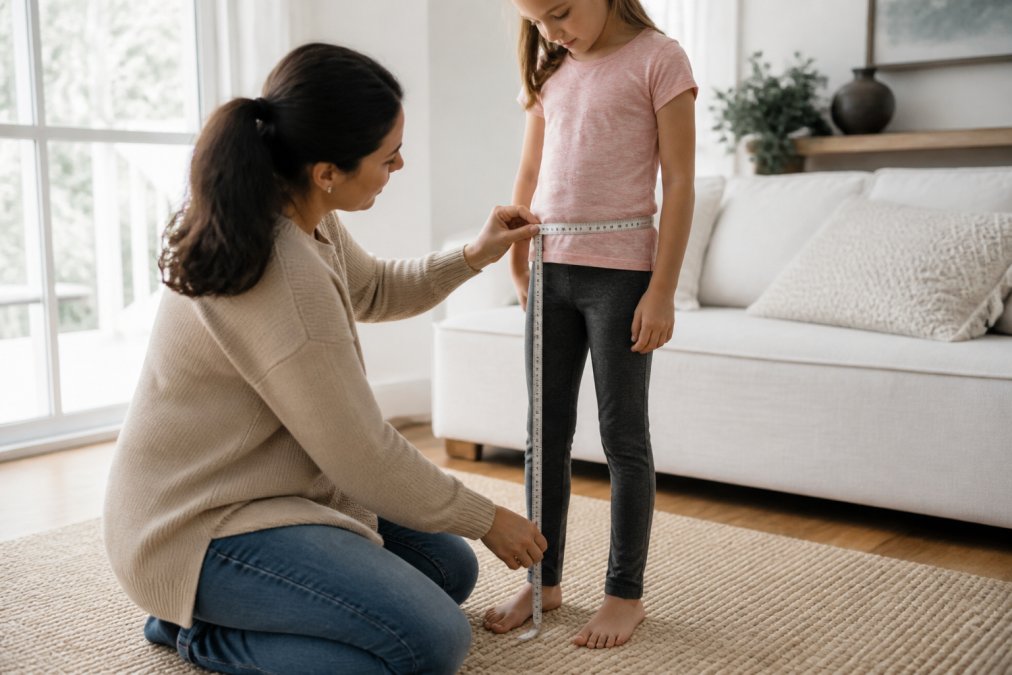
Write down measurements and reference the actual size chart for each item when shopping online.
The Girls Sleeveless Top & Denim Capri By Glitter Girl by Esmise and Girls Sleeveless Hoodie Top & Denim Capri both include detailed sizing information to help you find the right fit. Always check the specific measurements listed for each piece rather than guessing based on your daughter's usual size.

How to Build a School Capsule Wardrobe
A school capsule wardrobe uses fewer pieces that mix and match to create multiple outfits, saving money and reducing laundry stress.
Start with neutral basics:
- 2-3 solid-colored tops in white, gray, or navy
- 2-3 pairs of pants or leggings
- 1-2 cardigans or light jackets
- 1-2 dresses or skirts that fit the dress code
Add personality with patterned pieces:
- Printed tops with fun designs
- Patterned pants that still coordinate with basics
- Layering pieces in seasonal colors
Choose pieces that work together. Navy and gray basics coordinate easily; add pops of color with secondary pieces.
Hot Possessions & Glitter Girls offers over 4,000 apparel items.
Calculate cost-per-wear to justify spending slightly more on quality pieces. A $25 pair of pants worn 100 times costs 25 cents per wear. A $15 pair that falls apart after 30 wears costs 50 cents per wear.
School Dress Code Compliance Tips
Know your daughter's school dress code before buying. Read the actual policy document, not assumptions about requirements.
Common school dress code rules include:
- No graphic tees or logos
- Pants must reach the ankle
- Shorts must be knee-length or longer
- No tank tops or sleeveless shirts (sometimes)
- Closed-toe shoes required
- No ripped or distressed clothing
Screenshot the dress code policy to reference while shopping and prevent impulse buys that won't work.
Some schools require specific colors. If your daughter's school requires navy and white, don't buy bright pink pants, you'll waste money.
Check for seasonal dress code changes, winter may allow different layering than spring, and fall may have specific footwear requirements.
Ask the school office directly if unsure. Policies sometimes change mid-year.
Testing Durability and Washability Before Purchase
School clothes endure repeated washing, active play, and constant movement. Testing durability before buying prevents wasting money on pieces that fall apart mid-year.
Inspect seams and stitching before washing:
Examine seams under good lighting. Quality seams feel smooth and lie flat; loose or puckered stitching is a red flag. School-wear quality typically has 8-10 stitches per inch, while budget pieces have 5-6.
Check stress points: pocket seams, waistband stitching, and zipper attachment.
Assess fabric weight and construction:
Perform a real-world wash test:
- Wash in warm water with regular detergent.
- Dry as indicated on the tag using medium or high heat.
- Repeat the wash-and-dry cycle 2-3 more times before evaluating.
- Compare the test item to the original for shrinkage, color fading, pilling, and texture changes.
Watch for specific durability problems:
- Shrinkage: More than 5% shrinkage is problematic.
- Color fading: Bright colors fade faster than neutrals.
- Pilling: If pills form easily, the garment will look worn within weeks.
- Loss of softness: Poor fabric quality if stiff after washing.
- Elastic degradation: Loose elastic will only get worse.
- Seam separation: Failing seams indicate the garment will fail completely soon.
Check care tag requirements:
Make the durability decision:
Sensory Comfort and Special Considerations
For children with autism spectrum disorder, ADHD, or sensory processing sensitivities, clothing discomfort is a significant barrier to focus and learning. If your daughter has sensory sensitivities, clothing selection is core to her school success.
Understanding sensory triggers in clothing:
Identify your daughter's specific sensory profile:
Choose sensory-friendly fabrics and construction:
- Soft-touch jersey or cotton knits: These feel smooth and move with the body. Jersey is gentler than woven cotton because the knit structure is inherently more flexible and less rigid.
- High-quality cotton or cotton-blend: Natural fibers feel softer than synthetics. Look for "combed cotton" or "pima cotton," which are softer and less likely to pill than standard cotton.
- Moisture-wicking blends: Fabrics with a small percentage of synthetic (like 85% cotton, 15% polyester) often feel softer than 100% cotton while providing better moisture management.
- Tagless or tag-free construction: Many brands now offer tagless labels or use printed labels instead of sewn tags. If tags are unavoidable, remove them with scissors, the small investment in time prevents daily discomfort.
- Flat-felled seams or French seams: These create a smooth interior surface instead of a ridge. Check the inside of garments; quality sensory-friendly pieces have noticeably smoother seams.
- Smooth, non-binding elastic: Waistbands should feel soft and flexible, not stiff or tight. Gently stretch the waistband; it should give easily without snapping back aggressively.
- No tight cuffs or hems: Cuffs on sleeves and pant legs should be loose enough that they don't create pressure. If your daughter prefers looser fits, size up, comfort trumps style.
Evaluate specific garment details:
When shopping for sensory-sensitive children, inspect these details:
- Run your hand along all seams from the inside. Seams should feel smooth, not ridged or bumpy. Pay special attention to underarm seams, side seams, and inseams.
- Check the neckline. Is there a tag? Is the neckline binding smooth or does it have a rough edge? Some children need crew necks; others find them too tight and prefer v-necks or scoop necks.
- Examine the waistband. Is it soft and flexible? Does it have a drawstring (which can feel uncomfortable) or is it elastic-only? Elastic-only waistbands are often gentler.
- Feel the cuffs. Sleeve and pant cuffs should be soft and loose. Tight ribbed cuffs are common sensory triggers.
- Check for interior labels or printing. Some brands print size information directly on the fabric instead of using a tag. This is ideal for sensory-sensitive kids.
- Assess overall fabric weight and drape. Heavy, stiff fabrics restrict movement. Lightweight, fluid fabrics allow freedom of movement and feel less constraining.
Consider sustainable and eco-conscious options:
Build a sensory-friendly school wardrobe:
Frequently Asked Questions
What are the most comfortable fabrics for all-day school wear?
Cotton blends, soft-touch jersey, and moisture-wicking materials work best for school. Cotton breathes well and feels gentle on skin, while blends add durability and shrink resistance. Look for tagless labels and flat-felled seams to eliminate irritation. Avoid stiff or heavily treated fabrics that restrict movement or trap moisture.
How do you balance school dress codes with personal style when choosing comfortable school clothes?
Build a capsule wardrobe with neutral, code-compliant basics, then add personality through accessories, patterns, and layering pieces. Choose comfortable fabrics in school-appropriate colors first, then express style through shoes, bags, or statement tops that still meet dress code rules. This approach keeps her comfortable while letting her feel confident and fashionable.
How can you tell if school clothes will be durable enough for daily wear?
Check for reinforced seams, quality fabric weight, and colorfastness before buying. Machine-washable pieces should maintain their shape and color after multiple washes. Read product descriptions for construction details and customer feedback on longevity. Investing in well-made pieces reduces the need for frequent replacements and improves cost-per-wear over a school year.
What should be on a back-to-school clothing checklist for girls?
Include versatile layering pieces (cardigans, jackets), mix-and-match bottoms in neutral colors, breathable tops, comfortable everyday shoes, and weather-appropriate outerwear. Add a few statement pieces for variety and ensure everything meets school dress codes. Prioritize ergonomic fit and movement range so she can sit, run, and play comfortably throughout the day.