



Table of Contents
- What Is Popular in Women's Fashion Right Now
- Identifying Fashion Fads vs Trends: The 3-3-3 Rule
- How to Spot Quality in Trendy Apparel
- Digital Trend Tracking Tools and Wardrobe Databases
- Trend Forecasting Methodology: How the Industry Predicts What's Next
- Sustainability Impact of Trendy Fashion Choices
- Conclusion: Build a Wardrobe That Works for You
- Frequently Asked Questions
Last Updated: September 21, 2026
What Is Popular in Women's Fashion Right Now
Learning how to identify truly trendy fashion starts with separating what is genuinely popular from what is simply loud. Right now, women's fashion leans toward relaxed tailoring, rich earth tones, and pieces that move easily from day to night. At Hot Possessions & Glitter Girls, we watch these shifts closely because our shoppers want current looks that still feel wearable months later.
So what is popular in women's fashion right now? The short answer: soft structure, warm neutrals, and clothes that work for more than one occasion.
The 2026 Color and Silhouette Report
Warm neutrals lead the palette this year. Think chocolate brown, cream, olive, and soft camel. These shades mix easily, which makes them a smart base for any wardrobe.
Silhouettes are loosening up. Wide-leg pants, relaxed blazers, and flowy midi dresses dominate. Fitted pieces still matter, but they pair best with something roomy.
Here is what shoppers are actually reaching for:
- Wide-leg and barrel-leg pants
- Longline blazers with soft shoulders
- Midi skirts with movement
- Layered knits in tonal colors
- Simple dresses that work for work and weekends
A capsule wardrobe built on these shapes stretches further than a closet full of one-off buys.
Identifying Fashion Fads vs Trends: The 3-3-3 Rule
A fad burns bright and fades fast. A trend builds slowly and stays for years. Telling them apart is the skill that saves you money and closet space.
Use the 3-3-3 Rule as a quick filter:
- 3 weeks: Has this look stayed visible for at least three weeks?
- 3 sources: Can you find it across three different sources, like runways, stores, and street style?
- 3 outfits: Can you style it three different ways with what you own?
How to Spot Quality in Trendy Apparel
Trendy fashion is only worth buying if it survives more than a few washes, and if the trend itself has staying power. Quality has two layers: the construction of the garment and the maturity of the trend. Most shoppers only check the first. The best ones check both.
Fabric Composition and Stitching Checks
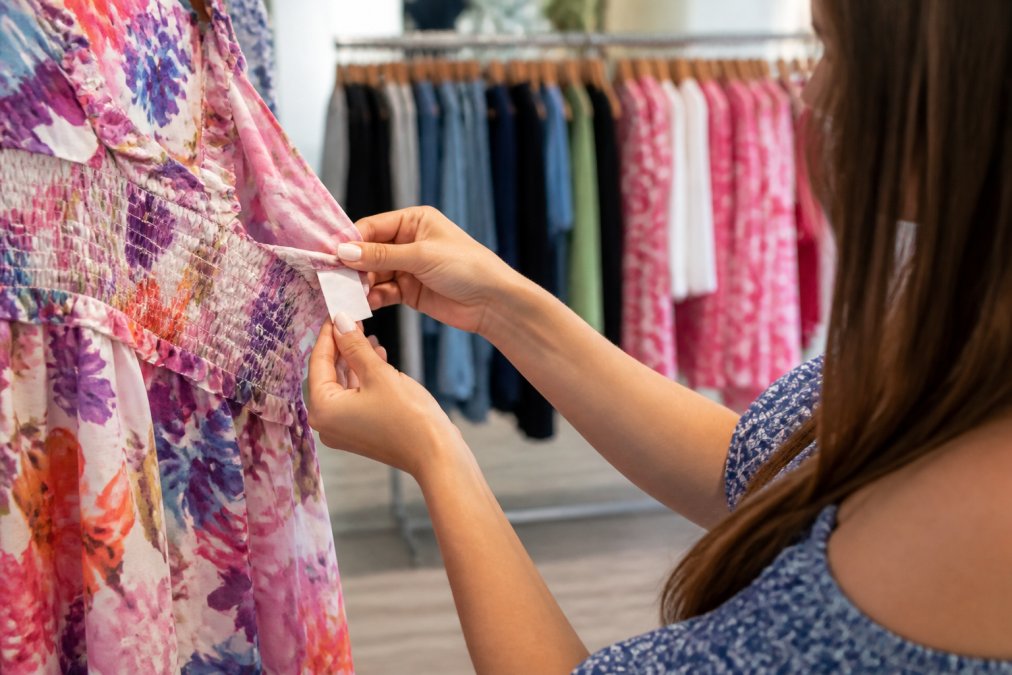
Start with the tag. Fabric composition tells you how the piece will wear over time. Natural fibers like cotton and linen breathe well. Blends can add stretch and durability. A common pattern is that a garment labeled 100% polyester at a premium price is being sold on design, not material, that is fine if you love the design, but know what you are paying for.
Then check the stitching:
- Look for straight, even seams with no loose threads
- Pull the seam gently to see if it holds
- Check that patterns line up at the seams
- Feel the fabric weight, thin fabric often wears out fast
The Visual Identification Guide: Design Markers That Signal a Trend Is Peaking vs. Fading
This is the part most trend articles skip. You can read a trend's life stage by looking at specific design markers on the garment itself. When a marker shows up on almost every rack at every price point, the trend is peaking. When it starts disappearing from premium brands first, it is fading.
Watch these markers:
- Hardware: Oversized zippers, chunky buckles, and logo-embossed buttons. When they migrate from designer pieces to discount racks within one season, the trend is peaking.
- Stitching: Contrast topstitching, exposed seams, and blanket stitching. These signal a trend is still being styled deliberately. When they vanish and the garment goes plain, the trend is cooling.
- Hemlines: Midaxi and asymmetric hems tend to lead. When every hemline in a store is the same length, that length is peaking, not emerging.
- Silhouette volume: Extreme volume (balloon sleeves, exaggerated shoulders) usually marks the peak. A return to fitted, simple shapes often means the trend has already passed.
- Color saturation: A trend at its peak shows up in the loudest, most saturated version of its color. As it fades, it moves to muted, dusty, or tonal versions.
Take a photo of the rack the next time you shop. Compare it to a photo from three months ago. If the same design markers are still everywhere, the trend is mature. If they have thinned out, it is fading, and that is your signal to skip the full-price buy.
Quality is not just about seams and fabric. It is also about whether the trend itself has legs. A well-made garment in a fading trend is still a bad buy. A simple garment in a rising trend can be a smart one.
Digital Trend Tracking Tools and Wardrobe Databases
You do not need a fashion degree to track trends. You need a system. The most reliable approach combines free digital tools that measure real interest with a personal record of what you already own. This is the angle most trend articles miss, they rely on opinion, not data.
Girls Sleeveless Top - Leopard Cross →
Objective Trend Tracking Tools
These tools measure what people are actually searching for and saving, not what a stylist thinks is hot:
- Google Trends: Enter a fashion term like "barrel jeans" or "ballet flats" and set the timeframe to 12 months. A steady upward line means rising interest. A sharp spike followed by a steep drop means a fad. A flat line means the item is a staple, not a trend.
- Pinterest Trends and Pinterest Predicts: Pinterest publishes an annual forecast and shows search volume for fashion terms. Because users save ideas for future purchases, Pinterest data often leads retail by a season.
- TikTok and Instagram search: Search a trend hashtag and sort by recent. If new videos are still getting strong engagement after 8-12 weeks, the trend has momentum. If the top results are months old, it is cooling.
- Retail new-arrivals pages: Track three retailers at different price points. When the same silhouette appears at all three within a few weeks, the trend has reached mass market, which usually means it is peaking, not emerging.
- Runway recap sites: These summarize each season's collections. Look for ideas that repeat across multiple designers, not a single standout look.
Building a Wardrobe Database
A wardrobe database is just a record of what you own. You can build one in a notes app or a spreadsheet. List each item, its color, its category, and how often you wear it.
- Do I already own something that does this job?
- Does this new piece work with at least three outfits I already have?
- Will I still want it in 12 months?
Add a "cost per wear" column to your database. Divide the price by the number of times you have worn the item. A $120 jacket worn 40 times costs $3 per wear. A $40 top worn twice costs $20 per wear. The cheaper item is often the more expensive one.
Data beats opinion. Google Trends, Pinterest, and a simple wardrobe spreadsheet will tell you more about what is truly trendy, and what is right for you, than any single influencer or store display.
Trend Forecasting Methodology: How the Industry Predicts What's Next
Trend forecasting is the process brands use to predict what shoppers will want next season. It blends runway analysis, retail sales data, and cultural signals.
Forecasters watch several inputs at once:
- Runway shows and designer collections
- Street style in major cities
- Social media and search interest
- Economic and cultural shifts
Trend forecasting is about patterns, not predictions. When an idea appears across runways, retail, and street style at the same time, it is likely here to stay.
Sustainability Impact of Trendy Fashion Choices
Every trend you buy has a cost beyond the price tag. Fast fashion moves quickly and often ends up in landfills within a season.
A more thoughtful approach starts with a few habits:
- Buy fewer, better pieces you will wear for years
- Choose fabrics and brands built to last
- Repair small damage instead of replacing items
- Donate or resell what you no longer wear
Conclusion: Build a Wardrobe That Works for You
Trends come and go, but a wardrobe built on real style lasts. The goal is not to chase every look. It is to spot the ones that fit your life and skip the rest.
Frequently Asked Questions
What is the 3-3-3 rule in fashion?
The 3-3-3 rule is a practical test for separating real trends from fads. Wait three weeks after spotting a new style, see it appear in three different retail environments (runway, mass market, and street style), and check if it works with at least three items already in your wardrobe. If a trend passes all three checks, it has staying power. If it fails, it's likely a micro-trend that will fade quickly.
How can I tell if a fashion trend is a fad or here to stay?
Look at the trend cycle. Fads spike fast and disappear within a few months, often driven by social media. Real trends build gradually, appear across multiple price points, and get adopted by different age groups. Check if the trend shows up in fabric composition changes at mass market stores or if it's endorsed by multiple designers across seasons. A trend that lasts more than six months and crosses demographics is usually here to stay.
What are the best resources for tracking current fashion arrivals?
Use a mix of digital tools and retail observation. Trend forecasting platforms like WGSN and Fashion Snoops publish seasonal reports, while Google Trends and TikTok's Creative Center show real-time search spikes. For hands-on research, visit mass market stores weekly to see what's new on display. Many online boutiques, including Hot Possessions & Glitter Girls, add new on-trend fashion daily so you can spot fresh styles without scrolling thousands of items.
How do I balance trendy pieces with a timeless wardrobe?
Apply the 70/30 rule: keep 70% of your wardrobe as neutral basics and timeless pieces, and reserve 30% for trendy items. This gives you styling versatility without constant replacement. When buying a trendy piece, check its cost-per-wear. A $14 girls sleeveless top with a leopard cross design can be worn multiple ways and mixed with staples, making it a smart trend investment rather than a one-time wear.