




Quick Summary
To mix textures in everyday outfits, start with a neutral base in black, cream, camel, gray, or navy so each texture stands out. Then layer one or two textured pieces on top. Keep the outfit to two or three textures to avoid looking messy.
- Choose one neutral color for bottoms so textured pieces stand out.
- Keep the top layer to one bold texture.
- Place heavier textures like leather or chunky knits over lighter ones like lace or satin.
- Mixing too many textures at once can look messy, so stick to two or three per outfit.
- Pair a heavy fabric with a light one and keep the finishes different.
Table of Contents
- Why Texture Adds Depth to an Everyday Outfit
- Step 1: Start With a Neutral Base
- Step 2: Balance Contrasting Fabric Weights
- A Practical Texture-Pairing Matrix by Fabric, Weight and Finish
- Step 3: Layer Heavier Textures Over Lighter Ones
- How to Mix Patterns and Textures Without Looking Busy
- Texture Outfit Ideas for Everyday Occasions and Seasons
- Try Your First Textured Look With Pieces From Hot Possessions
- Frequently Asked Questions
Why Texture Adds Depth to an Everyday Outfit
Texture is the quiet difference between an outfit that looks put together and one that looks flat.
Texture creates visual interest. Smooth fabrics reflect light evenly, while knits, wool, and velvet absorb it and show shadows.
Mixing textures also adds depth to simple color palettes. A black outfit made from one fabric can look heavy or dull.
Watch out: Mixing too many textures at once can look messy. Stick to two or three textures per outfit.
Step 1: Start With a Neutral Base
Pick a neutral base first. Black, cream, camel, gray, and navy work well because they let each texture stand out without competing for attention.
A neutral base is the foundation of the outfit. Choose one or two base pieces, such as trousers or a straight skirt, in a single tone.
Many people start with color and then struggle to add texture. Reversing that order often works better. Start with a calm base, then add one textured piece at a time.
- Choose one neutral color for bottoms
- Keep the top layer to one bold texture
- Add one accent piece in a contrasting finish
Step 2: Balance Contrasting Fabric Weights
Fabric weight matters as much as the texture itself, but weight alone isn't the whole story. Two heavy fabrics can work together if their volume and drape are balanced, and two light fabrics can fail if one is stiff and the other is fluid. The goal is to create contrast without letting one piece overwhelm the other.
The Heavy-Light Rule
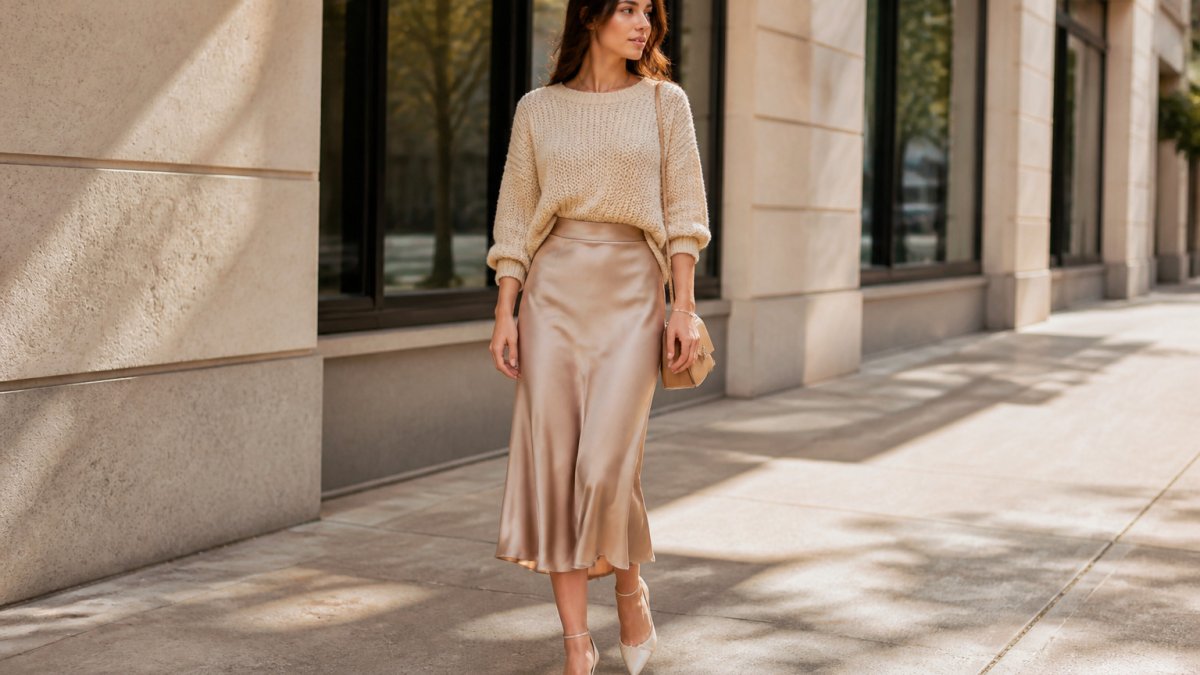
Start with a simple principle: pair one heavy piece with one light piece. A chunky knit sweater over a fine ribbed tank works because the knit adds bulk on top while the tank keeps the base sleek. A heavy wool coat over a featherweight chiffon blouse can look unbalanced because the coat's structure swallows the blouse, unless you add a mid-weight layer (like a fine-gauge knit) between them to bridge the gap.
- If the top is bulky, keep the bottoms sleek (straight-leg jeans, ponte pants, a pencil skirt)
- If the top is sheer or fine, let the bottoms carry more weight (wool trousers, denim, leather skirt)
- If both pieces are heavy, choose one with a defined shape and one with drape, a structured wool blazer over fluid wide-leg trousers, for example
Volume, Drape, and Proportion
Weight is about fabric density; volume is about how much space a garment takes up.
Drape describes how a fabric falls. Stiff fabrics (denim, taffeta, heavy wool) hold their shape; fluid fabrics (satin, jersey, fine knits) follow the body.
Proportion is the relationship between top and bottom volume. A common pattern is to keep one half fitted and the other half relaxed. If you're wearing an oversized chunky knit, pair it with slim or straight-leg bottoms.
Practical Checks Before You Leave
- Shoulder check: If the top layer has heavy structure (blazer, coat), make sure the layer underneath doesn't add bulk at the shoulders, fine knits and smooth blouses work better than chunky sweaters.
- Hem check: If the top is long and heavy, make sure the bottom isn't also long and heavy, a long chunky cardigan over wide-leg trousers can shorten your silhouette. Try a shorter jacket or a slimmer bottom.
- Movement check: Walk and sit down. Stiff fabrics that don't move with you will feel uncomfortable and look awkward. If a heavy piece restricts movement, swap it for a mid-weight alternative.
Bridging Layers
When two textures feel too far apart in weight, add a bridging layer. A fine-gauge knit between a heavy coat and a light blouse gives the eye a middle step. A smooth leather belt between a chunky knit and a fluid skirt does the same. Bridging layers are especially useful in transitional weather when you need warmth without bulk.
Two weights can work, but three give you more room to adjust proportion and drape without adding visual noise.
A Practical Texture-Pairing Matrix by Fabric, Weight and Finish
Use this quick reference when building outfits. Read across to see which fabrics tend to work together.
| Fabric | Weight | Finish | Pairs Well With |
|---|---|---|---|
| Chunky knit | Heavy | Matte, soft | Satin, denim, leather |
| Leather | Medium to heavy | Glossy or matte | Knit, cotton, tweed |
| Velvet | Medium | Soft sheen | Denim, ribbed knit |
| Satin | Light | Shiny | Wool, denim, leather |
| Denim | Medium | Matte | Knit, silk, lace |
| Lace | Light | Sheer, delicate | Leather, denim, knit |
Use this table as a starting point. When in doubt, pair a heavy fabric with a light one and keep the finishes different.
Step 3: Layer Heavier Textures Over Lighter Ones
Layering is where texture mixing gets practical. Place heavier textures on the outside and lighter ones underneath.
This order works because it looks natural and feels comfortable. Heavier outer layers also hold their shape better, which keeps the outfit looking neat all day.
- Put chunky knits or leather on top
- Use fine knits, lace, or satin underneath
- Keep the visible layers to two or three
A light layer such as the Girls Sleeveless Top - Tunic - Allover Lace can sit under a heavier jacket for a textured look.
How to Mix Patterns and Textures Without Looking Busy
Patterns and textures can coexist, but the balance needs care. Choose one pattern as the focus and keep everything else textured but solid. A striped knit sweater works with a plain leather skirt.
Avoid pairing two strong patterns with two strong textures. That combination quickly looks busy. Let one element lead and let the rest support it.
Scale matters too. Pair a large pattern with a small texture, or a small pattern with a larger texture, so each element has room to stand out.
Texture Outfit Ideas for Everyday Occasions and Seasons
Texture mixing becomes useful when it translates into outfits you can actually wear. Below are concrete formulas for common occasions, plus seasonal adjustments that account for weather and comfort.
Work and Office
A structured blazer in a matte wool or ponte knit over a satin or silk blouse creates a smooth-versus-tactile contrast that reads polished without being loud. Pair with wool trousers or a pencil skirt in a neutral tone. Keep the visible textures to three: matte wool, smooth satin, and a fine ribbed knit if you add a shell underneath. Avoid chunky knits under blazers, they add bulk at the shoulders and can make the jacket pull.
- Business casual: Fine-gauge knit sweater, smooth leather loafers, wool-blend trousers
- Business formal: Satin blouse, structured wool blazer, smooth leather belt
- Creative office: Corduroy blazer, cotton tee, denim or twill trousers
Casual Weekend
Start with denim as your matte anchor, then add one tactile layer and one smooth accent. A ribbed knit top with straight-leg jeans and leather sneakers works because the ribbing adds vertical texture, the denim is flat and matte, and the leather adds a subtle sheen. If you want more contrast, swap the sneakers for suede boots, suede is tactile but low-sheen, so it won't compete with the ribbing.
- Errands: Cotton tee, chunky cardigan, smooth leather crossbody bag
- Brunch: Lace-trim camisole under a denim jacket, smooth cotton skirt
- Outdoor market: Flannel shirt, smooth nylon joggers, suede sneakers
Evening and Night Out
Evening outfits benefit from one high-sheen texture paired with one matte or soft texture. A velvet top with a leather skirt works because velvet has a soft sheen and leather has a harder gloss, they contrast without clashing. If you prefer a dress, a satin slip dress under a cropped leather jacket gives you the same smooth-versus-tactile balance in one piece. Keep accessories smooth (patent leather, polished metal) so they don't add a third rough texture.
- Dinner date: Velvet blouse, smooth ponte pants, leather heels
- Concert: Leather jacket, ribbed knit dress, suede boots
- Party: Satin skirt, fine-gauge knit top, smooth clutch
Travel
Travel outfits need textures that resist wrinkles and static. Fine-gauge knits, ponte, and smooth cotton blends pack well and layer without bulk. Avoid heavy wool and stiff leather on long travel days, they trap heat and are hard to adjust in transit. A lightweight ribbed knit, smooth jersey trousers, and a packable nylon jacket give you three textures with minimal care.
- Flight: Ribbed knit top, smooth jersey pants, slip-on leather sneakers
- Weekend trip: Cotton tee, chunky knit cardigan, smooth twill trousers
- Warm-weather travel: Linen shirt, smooth cotton shorts, woven straw bag
Seasonal Adjustments
Cold weather: Heavy knits, wool, corduroy, and suede work well together because they share a matte finish but differ in weight and pile.
Warm weather: Light textures like lace, linen, and fine cotton keep you cool while still adding visual interest.
Transitional weather: Layer a light knit over a smooth camisole and under a structured denim or canvas jacket. This lets you remove layers as temperatures change without losing the texture contrast.
Comfort and Wearability
Texture choices affect how an outfit feels all day. Scratchy wool, stiff leather, and heavy tweed can look great but may irritate skin or restrict movement. If you're sensitive to texture, keep the tactile elements away from direct skin contact, wear a smooth cotton or silk base layer underneath. Static is another common issue with synthetic satins and fine knits; a light spritz of anti-static spray or a smooth lining helps.
Try Your First Textured Look With Pieces From Hot Possessions
Ready to test these ideas? Start with one neutral base and one textured layer. At Hot Possessions & Glitter Girls, we recommend beginning with a single textured piece that anchors the whole outfit.
Mixing textures gets easier with practice. Start small, keep your base neutral, and layer with intention. Soon you will find combinations you love and can repeat without thinking.
Frequently Asked Questions
How do you mix textures in an outfit?
Start with one dominant texture, such as a chunky knit or leather, and anchor it with a smooth or neutral piece. Keep the rest of the outfit in a tight color range so the textures read as intentional rather than cluttered. Balance heavy with light, for example a wool sweater over a silky camisole. Limit yourself to two or three distinct textures per outfit, and vary the finish so matte, glossy and fuzzy pieces each have a clear role in the look.
What textures go well together in clothing?
Knits pair well with denim, leather and smooth wovens because the contrast in surface and weight is easy to read. Velvet looks good against ribbed knit or crisp cotton. Lace works best over a solid, matte base such as jersey or cotton twill. Leather pairs naturally with soft wool and cotton. When in doubt, combine one textured piece with one smooth piece and keep the palette neutral.
How many textures should you mix in one outfit?
Two or three textures is the practical limit for most everyday looks. Two distinct textures create a clean contrast, such as ribbed knit and denim. Three can work when one is a neutral background, like a plain cotton tee under a knit cardigan with leather shoes. Beyond three, outfits often start to look busy, so reduce the number of textured pieces or keep the additional textures in small accents such as a bag or belt.
Can you mix patterns and textures in the same outfit?
Yes, but keep one of them quiet. A textured solid such as a cable knit or suede paired with a patterned skirt or printed top works because the texture carries the interest while the print stays controlled. Avoid pairing two busy elements, like a sequin top with a bold floral skirt. Choose a shared color from the print to tie the look together, and let the textured piece be the neutral anchor.