









Table of Contents
- Why Rhinestone T-Shirt Care Matters
- How to Wash Rhinestone Clothing: Step-by-Step
- Can Rhinestone Shirts Go in the Dryer?
- How to Remove Stains from Rhinestone Clothing
- How to Store Rhinestone Shirts Long-Term
- What to Do When Rhinestones Come Loose or Fall Off
- Rhinestone T-Shirt Care by Attachment Method
- Frequently Asked Questions
Last Updated: October 18, 2026
Why Rhinestone T-Shirt Care Matters
Rhinestone t-shirts combine soft fabric with delicate crystal embellishments that lose their sparkle or fall off without the right approach. At Hot Possessions & Glitter Girls, we know rhinestone clothing needs specific washing and storage techniques.

Rhinestones are glued or sewn onto fabric, and water, heat, and rough handling can damage both the stones and their adhesive. Proper rhinestone t-shirt care extends the life of your favorite pieces and keeps them sparkling for years.
How to Wash Rhinestone Clothing: Step-by-Step
Washing rhinestone clothing correctly is the foundation of good care: gentle handling, cold water, and mild detergent.

Prepare Your Garment Before Washing
Check the care label for instructions based on fabric blend and attachment method, and gently press any loose rhinestones back into place.
Turn your rhinestone garment inside out before washing to protect the decorated side from friction and detergent, preserving shine and preventing stones from loosening.
Empty pockets, inspect seams, and treat stains lightly, avoiding scrubbing the rhinestone area.
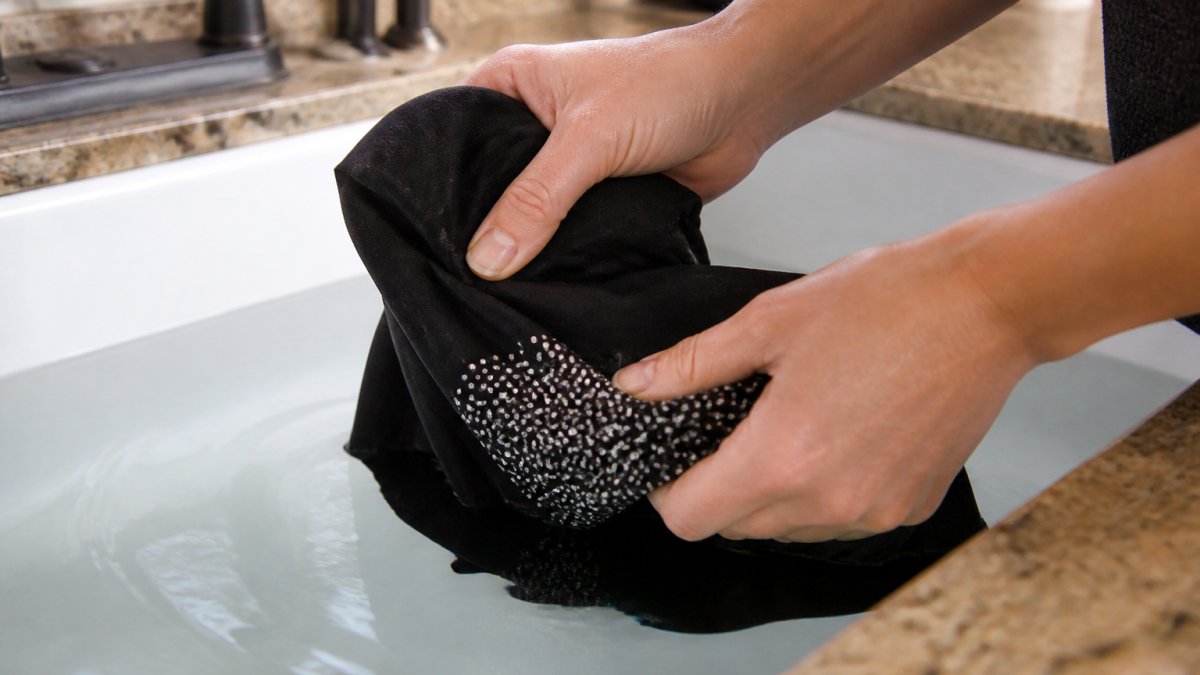
Choose the Right Washing Method
Hand washing is safest.
If you use a washing machine, select the delicate cycle with cold water and place your rhinestone t-shirt inside a mesh wash bag.
Never use bleach, fabric softener, or harsh chemicals, which break down the glue and can discolor the fabric underneath.
Rinse thoroughly with cold water until it runs clear, removing any detergent residue on the stones or fabric.
Can Rhinestone Shirts Go in the Dryer?
No, avoid machine drying rhinestone shirts. Heat damages the adhesive holding rhinestones in place and can shrink delicate fabrics.

Air-dry instead. Lay the garment flat on a clean towel or hang it on a padded hanger in a cool, dry area.
Never tumble dry on any heat setting, since even low heat loosens rhinestones over time.
Never iron directly on rhinestone designs.
How to Remove Stains from Rhinestone Clothing
Treat stains quickly but gently. Blot fresh stains with a clean, damp cloth rather than scrubbing, which pushes stains deeper and may dislodge stones.
Avoid harsh chemicals or stain removers, since many contain bleach that damages the fabric and the adhesive holding rhinestones.
For stubborn stains, soak in cold water with mild detergent for 15-30 minutes, then gently work the stain.
If a stain persists, accept it rather than risk damage from aggressive scrubbing or chemicals.
Women Short Sleeve T shirt - Rhinestone Cotton/Spandex →
How to Store Rhinestone Shirts Long-Term
Fold rhinestone clothing rather than hanging it for long periods, since hanging stretches the fabric and pressures the stones.
Avoid plastic bags or airtight containers, which trap moisture and cause mold. Use breathable or cotton garment bags in an area with good air circulation.
Check stored rhinestone shirts occasionally for loose stones and press them back into place before wearing.
| Storage Method | Best For | Duration |
|---|---|---|
| Folded with tissue paper | Long-term storage | 3+ months |
| Padded hanger in closet | Regular rotation | 1-2 weeks |
| Breathable garment bag | Travel and storage | Any length |
| Drawer with dividers | Easy access | Any length |
What to Do When Rhinestones Come Loose or Fall Off
A loose rhinestone is a warning, not a crisis. Catching it early is the difference between a 60-second fix and a visible bald spot.
Step 1: Diagnose Before You Touch
Before you glue anything, figure out why the stone loosened:
- Adhesive failure (glued or hotfix): The stone lifts cleanly and the back is smooth or has a thin film. This is the most common case and the easiest to repair.
- Thread failure (sewn): The stone is still attached but wobbles, or you can see a broken or frayed thread. Do not glue a sewn stone, re-sew it.
- Fabric failure: The fabric under the stone has torn or thinned. Gluing a stone onto damaged fabric will not hold. Back the area with a small patch of fusible interfacing from the inside before reattaching.
Step 2: Choose the Right Adhesive
The wrong glue will fail within a wash or two.
- For glued and hotfix stones: Use a clear, flexible fabric adhesive formulated for rhinestones and crystals. Two-part epoxy is too rigid and will crack; superglue (cyanoacrylate) turns brittle, can fog the stone, and bonds skin instantly, avoid it. A fabric-safe rhinestone adhesive that stays slightly flexible is the right choice.
- For sewn stones: Use a strong polyester or nylon thread matched to the stone color, and a sharp needle sized for the fabric. Do not use cotton thread, which weakens faster with washing.
- For metal settings: A tiny drop of clear jewelry adhesive inside the setting holds the stone without wicking onto the face.
Step 3: Apply and Cure Correctly
- Clean the stone back and the fabric spot with isopropyl alcohol; let both dry fully.
- Apply a small dot of adhesive to the stone, not the fabric, this prevents excess glue from spreading and stiffening the fabric.
- Press the stone into place and hold steady for 30-60 seconds.
- Let it cure undisturbed for the full time on the adhesive label, typically 24 hours for a full-strength bond. Do not wear or wash the garment before the cure time is up, even if the stone feels secure.
Step 4: Replace a Missing Stone
If the original stone is lost, you can still repair the garment:
- Match the size and shape first. Rhinestones are sized in millimeters (common flat-back sizes run from about 2 mm to 10 mm) and in standardized shapes (round, square, teardrop, navette). Measure a neighboring stone with a ruler to get the size right.
- Match the color and finish second. Clear, crystal, and aurora borealis (AB) finishes look different under light; a mismatched finish will stand out more than a slightly different size.
- Match the setting type. Flat-back stones need flat-back replacements; prong-set or sew-on stones need the same setting type or the repair will not sit flush.
Step 5: Know When to Stop Repairing
A single loose stone is a repair. A pattern of failures is a signal. If stones are lifting across the whole design, the adhesive has reached the end of its life and spot repairs will keep failing. At that point, professional re-stoning or replacement is more practical than repeated fixes.
Rhinestone T-Shirt Care by Attachment Method
Not all rhinestones are attached the same way, and the attachment method is the single biggest factor in how much abuse a garment can take. A glued stone and a sewn stone on identical fabric need different handling. Before you wash, figure out which type you own, then adapt the routine below.
How to Tell Which Attachment Method You Have
- Glued (craft-adhesive) stones: Look for a slight raised bead of clear or yellowish adhesive around the base of the stone. The back of the fabric often feels stiff or tacky under the design. These are the most common on fashion tees and the most vulnerable.
- Hotfix (heat-set) stones: The stone sits flush with a thin, shiny adhesive film that was activated by heat during manufacturing. There is usually no visible glue bead, and the stones feel firmly bonded with almost no give when you press them sideways.
- Sewn-on stones: You can see thread passing through holes in the stone or through a metal setting. These are common on higher-end embellishment and on stones with drilled holes or prong settings.
If you cannot tell, press a stone gently sideways with a fingernail. A glued stone will flex slightly; a hotfix stone will feel rigid; a sewn stone will move only with the fabric.
Glued Rhinestones
Craft adhesive is the weakest link. Most consumer rhinestone glues soften with sustained heat and lose grip with prolonged water exposure, so the goal is short contact time with water and zero heat.
- Hand wash in cold water (below 85°F if you can measure it) for no more than 5 minutes of gentle swishing.
- Never soak. Extended soaking is the most common cause of glue failure on these garments.
- Skip the washing machine entirely if the design is dense or the stones are large. If you must machine wash, use a mesh bag on the delicate cycle with cold water and a low spin speed.
Hotfix (Heat-Set) Rhinestones
Hotfix adhesive is activated at high temperature during manufacturing and re-softens at similar temperatures. That means heat, not water, is the primary threat. These stones tolerate cold water well but will release if you iron over them, tumble dry on any heat setting, or leave the garment in a hot car.
- Machine washing on a cold, delicate cycle in a mesh bag is generally acceptable.
- Never tumble dry, even on air-only or low-heat settings. Residual heat in a dryer can exceed the adhesive's softening point.
- If you must iron the fabric around the design, use the lowest setting, no steam, and press from the inside with a pressing cloth between the iron and the stones.
Sewn-On Rhinestones
Sewn stones are the most durable because thread, not adhesive, holds them. They can handle slightly more agitation, but the thread itself is the failure point, a broken stitch can release a stone and start a chain of unraveling.
- Machine wash cold on a gentle cycle is usually fine; a mesh bag still helps.
- Inspect the stitching after every few washes. Run a fingernail along the thread; if it feels frayed or loose, reinforce it with a few hand stitches before washing again.
- Avoid fabric softener, which can coat and weaken thread over time.
Adapting Care to Fabric and Construction
The attachment method is only half the equation. The fabric underneath changes the calculus:
- Cotton and cotton-spandex blends: Generally forgiving. Cold water and air-drying prevent shrinkage and preserve stretch. Spandex degrades with heat, so the no-dryer rule matters even for the fabric itself.
- Delicate knits and sheer fabrics: Hand wash only. The fabric, not the stones, is the limiting factor here.
- Heavily embellished designs (dense all-over stone coverage): Treat as glued even if some stones are hotfix, because the weight of the design stresses every bond. Hand wash and flat dry.
Frequently Asked Questions
Will rhinestones come off in the wash?
Rhinestones can come loose if your garment is washed incorrectly, but proper care prevents this. The key is turning your rhinestone t-shirt inside out, using cold water, a gentle cycle, and mild detergent. Avoid rubbing the embellished areas and never use bleach or harsh chemicals. Sewn rhinestones are more secure than glued ones, so check your garment's care label. With these precautions, your rhinestone clothing will stay sparkly through many washes.
How to wash a rhinestone t-shirt without damaging the stones?
Start by turning your rhinestone t-shirt inside out to protect the crystals. Use cold water and a delicate or gentle cycle on your washing machine. Add only mild, gentle detergent and skip bleach entirely. Place the garment in a wash bag for extra protection. Avoid rubbing or agitating the embellished areas. After washing, rinse thoroughly with cool water and air-dry flat or hang-dry. Never put rhinestone garments in the dryer, as heat and tumbling can loosen stones and damage fabric.
Can you iron a shirt with rhinestones?
Avoid direct heat on rhinestones when ironing. If your rhinestone t-shirt needs creases removed, use a cool iron and iron only the non-embellished sections of the garment. Never place the iron directly on rhinestones or crystals, as heat can melt the glue or adhesive holding them. For embellished areas, let them air-dry flat instead. If you must iron near rhinestones, place a clean towel over them first as a protective barrier.
How should you store rhinestone clothing to keep it from snagging?
Store rhinestone shirts flat or folded loosely to prevent snagging and protect the stone attachment. Avoid hanging them for long periods, as the weight can stress the adhesive or stitching. Keep rhinestone garments away from rough fabrics that might catch on the crystals. Store in a cool, dry place away from direct sunlight to preserve the shine and prevent fading. If space allows, store each piece separately or separate them with clean tissue paper to prevent the rhinestones from rubbing against other garments.