








Last Updated: October 26, 2026
Quick Summary
Sustainable fashion tips for budget shoppers include buying secondhand first, calculating cost per wear to prioritize quality over price, choosing natural fibers and timeless styles, extending garment life through proper care and repair, and building a versatile wardrobe with coordinating basics. These practices help you save money while keeping clothing out of landfills.
- Shop secondhand at thrift stores and online resale platforms, inspecting seams, zippers, and fabric condition before buying.
- Calculate true cost per wear by dividing purchase price plus repair costs by estimated yearly wears and years of wear.
- Prioritize natural fibers like cotton, linen, and wool in classic silhouettes that work across multiple outfits and seasons.
- Extend garment life by washing in cold water, air-drying, repairing small issues immediately, and using a tailor for major alterations.
- Build a wardrobe around 3-4 neutral base colors and 2-3 accent colors so pieces mix and match easily.
Table of Contents
- Shop Secondhand First: Thrift Shopping Tips
- Buy Less, Choose Better: The Cost-Per-Wear Strategy
- Affordable Sustainable Fashion: Prioritize Natural Fibers and Timeless Styles
- Make Clothes Last Longer: Care, Repair, and Alteration
- Build a Sustainable Wardrobe with Versatile Basics
- Verify Sustainability Claims Before You Buy
- Start Your Sustainable Wardrobe Today
- Frequently Asked Questions
Shop Secondhand First: Thrift Shopping Tips
Buying secondhand is the single best way to practice sustainable fashion tips for budget shoppers. You get quality pieces at a fraction of the price, and you keep clothing out of landfills.
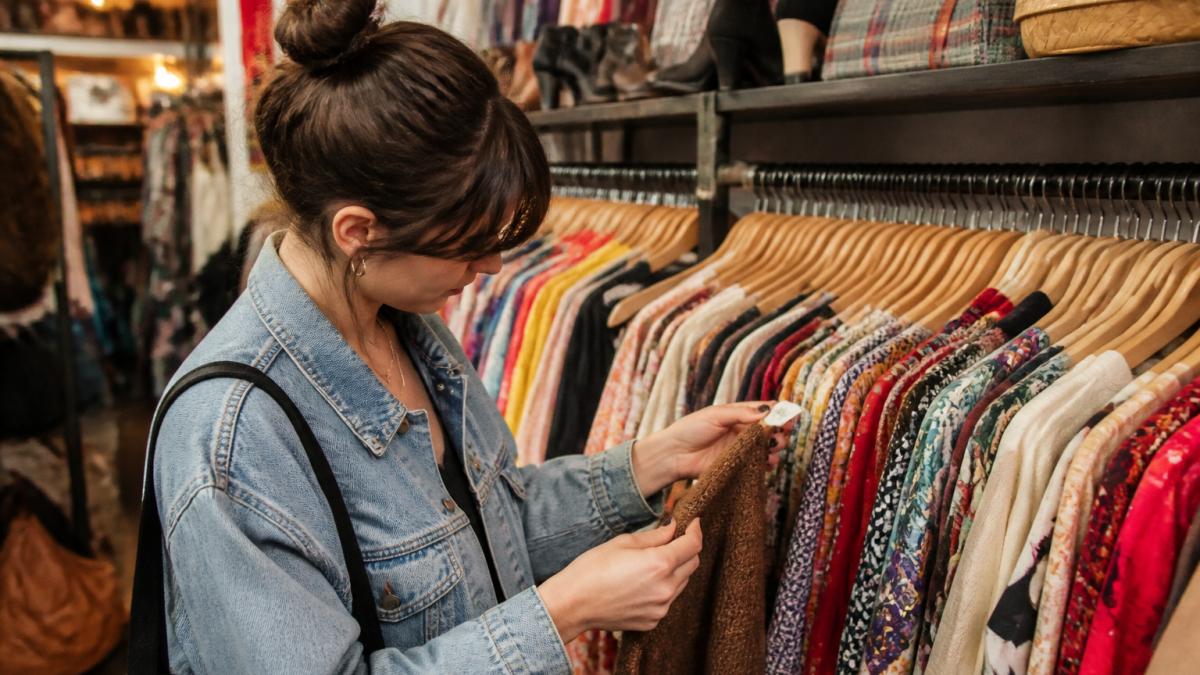
Thrift stores, online resale platforms, and clothing swaps all offer access to affordable sustainable clothing. The key is knowing what to look for.
Start with these thrift shopping steps:
- Visit local thrift stores and charity shops regularly to find the best selection
- Check online resale platforms for specific styles or brands you want
- Inspect garments carefully before buying, even if the price is low
A Step-by-Step Secondhand Shopping Checklist
Most thrift advice stops at "check the seams." Use this checklist to assess fit, fabric condition, sizing, return policies, and quality whether you're in-store or online.
Before you go:
- Measure yourself (bust, waist, hips, inseam) and write the numbers down. Vintage and resale sizing varies wildly by decade and brand.
- Bring a fabric tape measure and a phone with a notes app for measurements and photos.
- Check the store's return policy. Many thrift stores are final sale; online resale platforms often allow returns within 7-30 days but may charge shipping.
In-store inspection (5 minutes per garment):
- Seams and stress points: Turn the garment inside out. Look at underarm seams, crotch seams, and pocket corners for thinning or split threads. Re-stitching a seam is cheap; a blown-out underarm is not.
- Fabric condition: Hold fabric up to light to spot thin spots, pilling, or shine from wear. Stretched-out elbows and knees rarely recover.
- Zippers and buttons: Zip and unzip fully. Check that the zipper pull stays on the track and that buttons aren't cracked or missing.
- Stains and odors: Check collars, cuffs, underarms, and hems. Sniff for smoke or mildew, these odors often persist through washing.
- Sizing reality check: Try it on if possible. If not, compare the garment's flat measurements to a piece you already own that fits well.
- Alteration cost: If it needs tailoring, get a quote before buying. A $6 dress that needs $25 in alterations is no longer a budget win.
Online resale inspection:
- Ask the seller for measurements and photos of tags, seams, and any flaws.
- Confirm the return window and who pays return shipping.
- Search the brand's size chart and read reviews for fit notes, resale listings often run small or large.
According to Earth Day's sustainable fashion guidance, shopping secondhand first is one of the most practical sustainable-shopping approaches available. You're not just saving money, you're extending the lifespan of clothing already in circulation.
When you shop secondhand, you may find unique pieces and timeless styles that retail stores no longer stock. This approach aligns with conscious shopping and mindful consumption.
Buy Less, Choose Better: The Cost-Per-Wear Strategy
The real measure of value isn't the price tag. It's how many times you actually wear the piece.
A $60 dress you wear 30 times costs $2 per wear. A $20 shirt you wear twice costs $10 per wear. The expensive dress is the better investment.
This strategy shifts your mindset from impulse buying to intentional purchasing. You stop asking "Can I afford this?" and start asking "Will I actually wear this enough to justify the cost?"
Use this cost-per-wear framework:
- Estimate how many times you'll realistically wear the piece in a year
- Divide the price by that number to find the true cost per wear
- Compare across options to find the best value
A Practical Cost-Per-Wear Calculator (With Lifespan and Repair Costs)
Most guides stop at price ÷ wears. That misses two variables that decide whether a cheap garment is actually cheap: how long it lasts and what it costs to keep it going. Use this expanded formula:
True cost per wear = (Purchase price + estimated repair and care costs) ÷ (wears per year × expected years of wear)
Work through it in four steps:
- Estimate wears per year. Be honest. A work blazer might get 60 wears a year; a cocktail dress might get 4. Count outfits you actually repeat, not occasions you imagine.
- Estimate expected years of wear. A well-made wool coat may last 8-10 years with care; a fast-fashion knit may last 1-2. Use conservative ranges.
- Add repair and care costs. Dry cleaning, tailoring, and mending add up. A $12 hem or a $15 zipper replacement should be included if you expect to need it.
- Divide. Compare the true cost per wear across options before you buy.
Worked example:
- Fast-fashion sweater: $25 purchase, 20 wears per year, 1.5 years expected life, $0 repairs → $25 ÷ (20 × 1.5) = $0.83 per wear
- Quality wool sweater: $90 purchase, 30 wears per year, 6 years expected life, $20 in repairs over its life → ($90 + $20) ÷ (30 × 6) = $0.61 per wear
The higher upfront price wins, but only because the lifespan and wear frequency assumptions hold. If you'd wear the $90 sweater only 10 times a year, the math flips.
Where this framework changes the decision:
- Special occasions: Renting a $150 dress for a one-time event often beats buying a $60 dress you'll wear once. Compare rental fee plus shipping against purchase price divided by expected wears.
- Trend pieces: A $40 trend item worn 5 times costs $8 per wear, worse than a $120 classic worn 40 times ($3 per wear).
- Repairs: A $30 repair on a $100 coat you'll wear 50 times a year for 5 more years adds $0.12 per wear, usually worth it.
Research from sustainable fashion purchasing behavior studies shows that environmentally concerned consumers who practice eco-friendly behavior are more likely to make intentional purchase decisions.
Buying less and choosing pieces you will wear repeatedly can help build a more versatile wardrobe.
Affordable Sustainable Fashion: Prioritize Natural Fibers and Timeless Styles
Natural fibers like cotton, linen, and wool are options to consider when choosing clothing.
Timeless designs also matter. Shop Pima cotton pieces that demonstrate sustainable natural fiber choices at affordable prices. Avoid trend-driven styles that feel dated within a season.
Build your foundation with these timeless pieces:
- Neutral basics in natural fibers (white cotton tees, denim, simple sweaters)
- Classic dresses that work for multiple occasions
- Well-fitting jeans in a versatile wash
According to Articles of Style sustainable fashion recommendations, choosing classic designs and buying the best quality you can afford creates a wardrobe that works longer and feels better.
Being intentional about where you spend can help you choose pieces that suit your wardrobe.
Make Clothes Last Longer: Care, Repair, and Alteration
The most sustainable piece of clothing is the one you already own.
Wash clothes less frequently, use cold water, and air-dry whenever possible.
Learn basic repairs like sewing on buttons, fixing loose seams, and patching small holes.
Extend garment life with these care practices:
- Wash in cold water and use gentle cycles to reduce wear
- Air-dry pieces instead of using the dryer when possible
- Store clothes properly to prevent wrinkles and damage
Learn more about Rhinestone T-Shirt Care: 7 Essential Washing Tips for specific guidance on extending the life of delicate or embellished pieces.
Alterations also make pieces work better for your body.
These care practices help extend the life of your clothes and reduce the need to buy replacements.
| Practice | How it helps |
|---|---|
| Wash in cold water and use gentle cycles | Reduces fading, shrinkage, and wear |
| Air-dry pieces instead of using the dryer | Prevents damage from heat |
| Store clothes properly | Prevents wrinkles and damage |
| Repair small issues immediately | Prevents problems from worsening |
| Treat stains immediately and spot-clean | Avoids washing entire garment unnecessarily |
| Learn basic repairs like sewing buttons | Adds years to garment life with minimal cost |
| Have a tailor adjust fit or fix major damage | Makes pieces wearable and keeps you wearing them longer |
Build a Sustainable Wardrobe with Versatile Basics
A sustainable wardrobe is built on versatile basics that work together. When pieces mix and match, you create more outfits from fewer items.
Start with a color palette of 3-4 neutral shades (black, white, gray, navy, or beige). Add 2-3 accent colors that you love. Build your wardrobe within this palette so everything coordinates.
Invest in pieces that serve multiple purposes. A blazer works for work, casual outings, and dressed-up events. A simple white tee works under almost everything.
Create a versatile wardrobe foundation:
- Choose 3-4 neutral base colors and 2-3 accent colors
- Build around classic silhouettes that work across seasons
- Prioritize pieces that layer and mix easily
You can explore Is Eco-Friendly Fashion Worth It for Teen Girls? to deepen your understanding of how to build sustainable wardrobes that work for different life stages.
A capsule wardrobe approach simplifies shopping and reduces impulse buying. When you know exactly what you need, you stop browsing and start searching for specific pieces.
Verify Sustainability Claims Before You Buy
Not every brand that claims to be sustainable actually is. Greenwashing is common.
Before you buy, do your research.
Read customer reviews and look for photos from real people wearing the pieces.
EXTERNAL_LINK: How to Research Clothing Brand Reputation Online provides step-by-step guidance for verifying brand claims and assessing sustainability credentials.
Verify sustainability claims with these checks:
- Look for third-party certifications on the brand's website
- Read their transparency reports about supply chain and labor practices
- Check customer reviews for real-world feedback on quality and durability
Ask specific questions: Where are the clothes made? What materials are used? How are workers treated?
Start Your Sustainable Wardrobe Today
Sustainable fashion tips for budget shoppers are entirely achievable.
The most impactful change is buying less and choosing better. Every piece you keep out of the landfill matters. Every garment you wear multiple times reduces your impact.
Our collection includes over 4,000 apparel items, with on-trend fashion added every day. We offer flexible payment options, including Afterpay and Klarna, and free shipping on orders over $150.
Frequently Asked Questions
How can I shop sustainably on a tight budget?
Start with secondhand shopping at thrift stores and online resale platforms. Buy fewer items and choose styles you expect to wear often. Calculate cost per wear by dividing an item's price by the number of times you expect to wear it. Care for and repair clothes you already own, and build a wardrobe of basics that work together.
Is thrifting a sustainable way to shop for clothes?
Thrift shopping gives existing garments another opportunity to be worn. Look for pieces with minimal visible wear, check seams and zippers, and inspect for stains or damage before purchasing.
How can I make my wardrobe more sustainable without buying new clothes?
Repair and care for what you already own. Learn basic mending techniques like sewing buttons, patching small holes, and fixing loose seams. Wash clothes in cold water, air-dry when possible, and store properly to prevent damage. Swap clothes with friends or family for special occasions. Wear items more frequently by styling them differently. These are practical steps to consider when caring for clothes you already own.
What should I look for when buying sustainable clothing?
Check fiber content on labels and research any sustainability claims. Examine stitching and hems, and read customer reviews. Consider whether a style suits your wardrobe and the occasions you have in mind.
Your sustainable wardrobe doesn't happen overnight. Start with one secondhand shopping trip. Calculate cost per wear on your next purchase. Repair one piece instead of replacing it. Small changes compound into real impact over time.