








Last Updated: October 27, 2026
Quick Summary
The most budget-friendly way to organize a closet is to empty it, declutter what you no longer wear, and sort items into zones before buying any organizers. Budget closet organization then relies on reusing what you already own, such as shoe boxes and tension rods, and only adding cheap upgrades once you know what you need.
- Empty the entire closet first so you can see everything you own.
- Ask whether you wore each item in the past year before keeping it.
- Use vertical space and a cheap double-hang rod in a small closet.
- Use free household items like shoe boxes and cereal boxes as organizers first.
- Group items into everyday, dress-up, outerwear, and seasonal zones.
Table of Contents
- Start by Emptying and Sorting Everything
- Declutter Before You Buy Anything
- How to Organize a Small Closet Without Extra Space
- Budget-Friendly Closet Organization Ideas That Cost Little or Nothing
- DIY Closet Organizers You Can Make at Home
- Zone Your Closet by Category and Season
- Keeping Your Closet Organized Once It Is Done
- Frequently Asked Questions
Most people who want to start with budget closet organization begin by buying bins. That's usually the wrong first move. The smarter path starts with what's already in the closet, then fills the gaps with cheap, practical fixes.
A budget closet is not about having fancy organizers. It's about making every item easy to find, easy to put back, and easy to see. You can do all of that for very little money if you work in the right order.
Start by Emptying and Sorting Everything
Take every single item out of the closet. Yes, everything. Pile it on the bed or the floor so you can see the full amount.
Once it's out, sort the pile into a few simple groups:
- Tops
- Bottoms
- Dresses and rompers
- Outerwear
- Shoes and bags
- Accessories
This step shows you what you have, and often reveals duplicates you forgot about. It also makes the next steps much faster.
Watch out: Don't skip the empty-closet step to save time. Organizing around a closet you haven't emptied means you'll likely miss items tucked in corners.
Declutter Before You Buy Anything
Go through each pile and ask one question: have I worn this in the past year? If not, it's a strong candidate to donate, sell, or swap. Check fit too. Clothes that don't fit well rarely get worn.
Keep a small "maybe" pile, but give it a deadline. Put it back in the closet with a date on a sticky note, and remove it if you haven't worn it by then.
Decluttering first is the single biggest money saver in budget closet organization. You stop paying for storage for things you'll never use, and you avoid buying organizers too big for your actual needs. Refining your inventory down to the essentials creates the necessary breathing room to implement the strategies found in our small closet guide.
How to Organize a Small Closet Without Extra Space
A small closet doesn't need more room. It needs better use of the room you have. Here's how to get more out of it:
- Use vertical space. Add a shelf above the rod if there's room, or stack folded items on a shelf.
- Double the hanging space. A cheap double-hang rod adds capacity for shirts and blouses.
- Hang shirts by sleeve length. Put long-sleeve items together and short-sleeve items together.
- Fold knits and keep hangers for structured pieces. Blouses and dresses hang well. Sweaters stretch when hung.
Common mistake: Many people cram everything onto the rod until it sags. Leave a few inches between hangers so you can see each piece.
Budget-Friendly Closet Organization Ideas That Cost Little or Nothing
You can organize most closets with items you already own. Try these first:
- Shoe boxes wrapped in leftover wrapping paper for shoes, belts, or scarves
- Old cereal or cracker boxes cut down to hold socks and underwear
- Tension rods across a cabinet for hanging bags or hats
- Plastic bags kept in a drawer for sorting out-of-season items
These fixes cost nothing and help you test your system before spending money. If something works well, you can upgrade it later.
DIY Closet Organizers You Can Make at Home
Simple homemade organizers work well and cost very little. A few ideas that are easy to build:
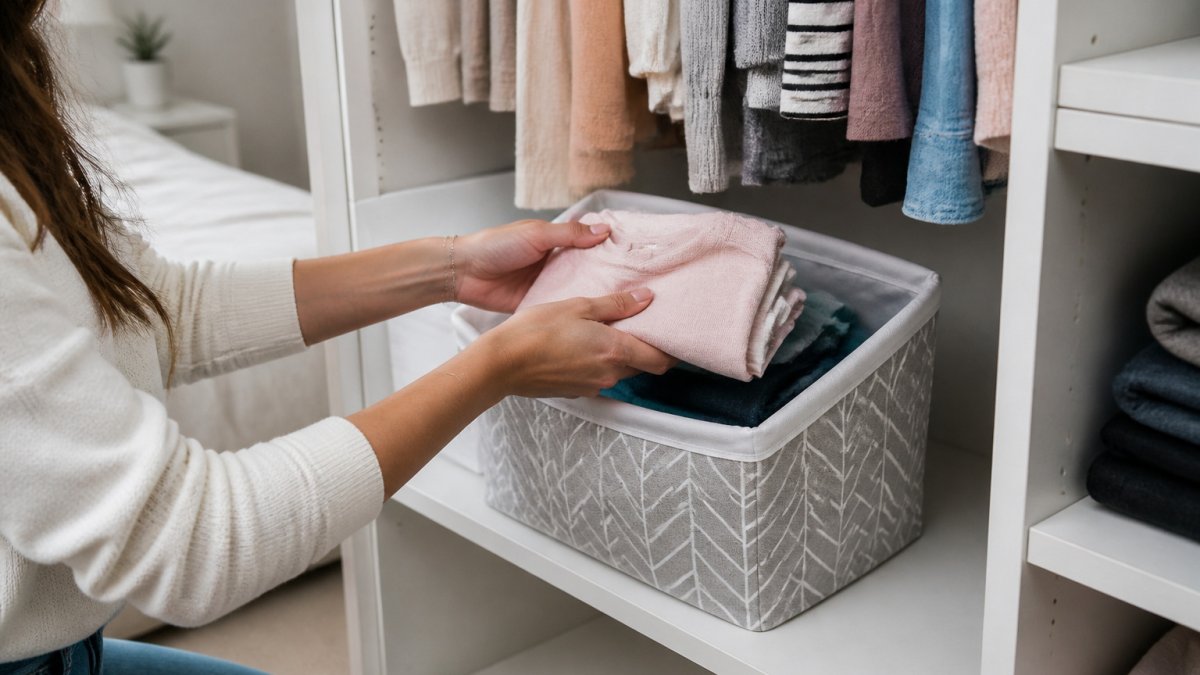
- Fabric bins: Use an old pillowcase or a thrift-store tote. Stitch or tie the top, then set it on a shelf for sweaters or pajamas.
- Hanging shoe organizer: Turn an old over-the-door shoe holder into a rack for accessories, scarves, or jewelry.
- Drawer dividers: Cut cardboard to size and tape it into a grid for underwear, socks, or jewelry.
Keep your DIY projects simple. The goal is to make items easy to reach, not to create a craft project that takes all weekend.
Zone Your Closet by Category and Season
Group similar items together so you always know where to look. A common zone setup looks like this:
- Everyday zone: Tops and bottoms you wear most often, at eye level
- Dress-up zone: Dresses, rompers, and going-out pieces
- Outerwear zone: Jackets and layers near the door or on a separate rod
- Seasonal zone: Off-season items on the top shelf or in labeled bags
Rotating seasonal items out every few months keeps your active closet small and easy to manage. Store them in bags or bins so dust and bugs stay out.
Best for: Shoppers with a single closet who need to split space between seasons and categories.
Here is a quick summary of the zones and how to keep them working.
| Zone | What goes there | Where it sits |
|---|---|---|
| Everyday | Tops and bottoms you wear most often | Eye level |
| Dress-up | Dresses, rompers, going-out pieces | Rod or dedicated section |
| Outerwear | Jackets and layers | Near the door or separate rod |
| Seasonal | Off-season items | Top shelf or labeled bags |
| Rotation | Seasonal items swapped out every few months | Every few months |
Keeping Your Closet Organized Once It Is Done
An organized closet stays that way only with a little upkeep. Try these habits:
- Put items back in their zone right after wearing them
- Do a quick 10-minute reset once a week
- Donate or sell one bag of clothes each season
- Before buying anything new, check whether you already own something similar
For more budget-friendly ideas on building a smart wardrobe, see 7 Sustainable Fashion Tips for Budget Shoppers. When you're ready to refresh your closet, the denim jacket is a versatile choice that pairs with almost anything. And if you're shopping for a teen's closet, Seasonal Transition Outfits for High Schoolers can help you plan pieces for changing weather.
Hot Possessions & Glitter Girls carries trendy pieces for women, juniors, and girls, so you can keep your closet current without starting over. A closet built on sorting, zoning, and simple habits will stay easy to use long after the organizing is done.
Frequently Asked Questions
How do you organize a closet on a budget?
Start by emptying the closet and sorting items into keep, donate, and discard piles. Once you have decluttered, group what remains by category, such as tops, bottoms, and dresses. Use what you already own, like shoeboxes, tension rods, and sturdy bags, to create zones. Most of this work costs nothing and only requires time, which makes it the most practical first step for anyone working with a tight budget.
What is the cheapest way to organize a closet?
The cheapest method is decluttering, since removing items you never wear frees up space without spending money. After that, reuse household items such as cardboard boxes, shoeboxes, and hangers you already have. Hanging your clothes in a consistent direction and folding sweaters instead of hanging them can also make a small closet feel more organized at no cost.
How can I organize a small closet with no money?
Begin by hanging clothes by category and color so you can see everything at a glance. Store off-season items in a bin under the bed or on a high shelf. Use the back of the door for shoes or accessories with a shoe rack you already own. Keeping only the pieces you wear regularly is the single most effective way to make a small closet function well without buying anything new.
How can I make more room in my closet without buying organizers?
Remove clothing that no longer fits, is damaged, or you have not worn in the past year. Switch to matching hangers, which take up less visual and physical space than mismatched ones. Fold knits and casual items instead of hanging them, and use the vertical space above the rod for items stored in boxes or bags. These steps often free up a noticeable amount of room without any purchase.