






Table of Contents
- Understanding Junior Sizing vs. Women's Sizes
- How Junior Clothing Fits Adults
- How to Measure for Clothing Sizes
- Junior to Women's Size Conversion Chart
- Brand and Garment Type Variation
- Decision Tree for Adults Choosing Junior Sizes
- Shopping Online and Managing Returns
- Frequently Asked Questions
Last Updated: October 12, 2026
Understanding Junior Sizing vs. Women's Sizes
Junior sizes and women's sizes are cut differently, which matters when choosing junior sizes for adults. Junior garments are designed for younger body proportions: slimmer cut, narrower shoulders, and shorter length.
Women's sizes are cut for adult shapes, with more room in the bust, waist, and hips and longer lengths.
The key difference isn't just the numbers: a junior size 7 is not a women's size 7. Construction, fit, and proportions differ fundamentally.
How Junior Clothing Fits Adults
Junior clothing can work beautifully for adults who understand how it fits differently. Many find junior sizes offer a closer fit and a more youthful silhouette, especially with a smaller frame or a preference for a slimmer cut.
Slimmer Cut and Narrower Fit
Junior garments have a slimmer cut throughout the torso: a higher, tighter waist, narrower shoulders, and differently positioned armholes.
This narrower fit appeals to adults who:
- Have a petite or lean frame
- Prefer fitted clothing that doesn't drape loosely
- Want a more contemporary, tapered silhouette
If you carry weight in your midsection or prefer relaxed fits, junior sizes will feel restrictive.
Length and Proportions
Junior sizing assumes a shorter height, so dresses, tops, and jackets run shorter than women's. For adults under 5'4", this works in your favor; for taller adults, junior clothing often hits awkwardly at the hip or thigh.
Junior inseams run 1-3 inches shorter than women's, so average-height or taller adults should expect cropped bottoms or hemming.
Sleeves also run shorter; for adults with longer arms, they may sit above the wrist.
How to Measure for Clothing Sizes
Accurate measurements are your best tool for choosing the right size. Use a soft measuring tape and wear fitted clothing.
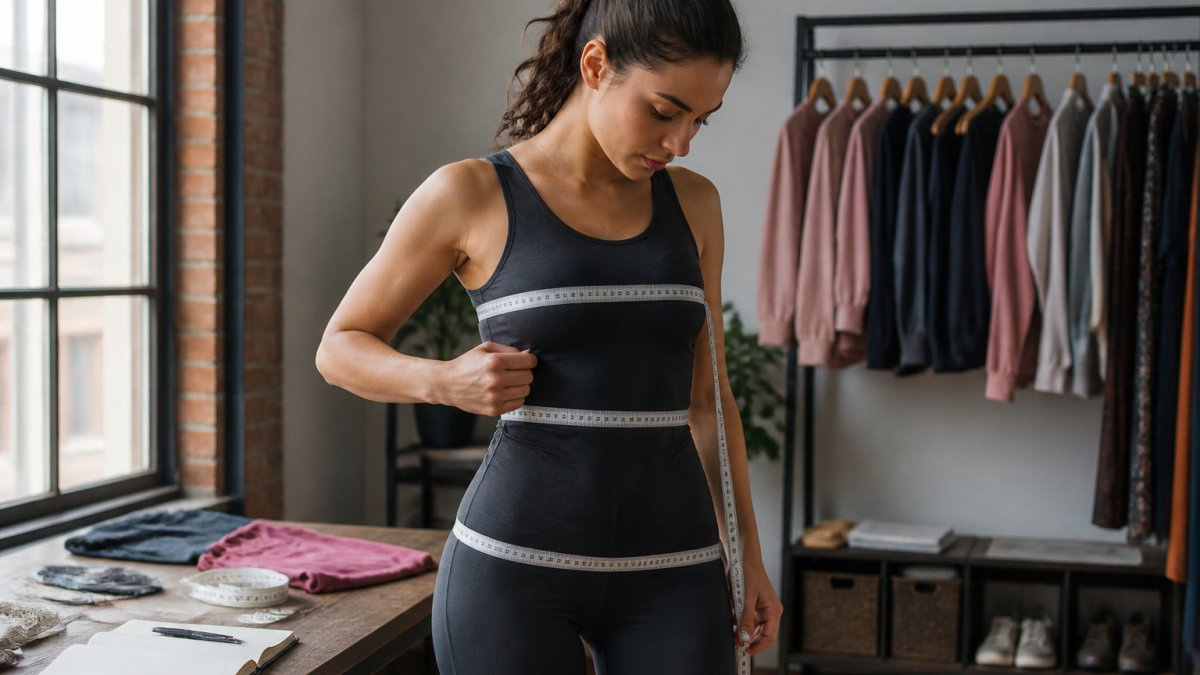
Measure these four key areas:
- Bust: Measure around the fullest part of your chest, keeping the tape parallel to the ground
- Waist: Measure around your natural waist (the narrowest part), not where your pants sit
- Hips: Measure around the fullest part of your hips and thighs
Write down these measurements. Compare them directly to the brand's size chart before ordering. This step alone prevents most sizing mistakes.
Junior to Women's Size Conversion Chart
Converting between junior and women's sizes isn't straightforward, a junior size 7 doesn't equal a women's 6 or 8 across all brands. The chart below offers approximate starting points; treat it as a rough guide, not a rule.
| Junior Size | Approximate Women's Equivalent | Typical Bust (in.) | Typical Waist (in.) | Typical Hip (in.) |
|---|---|---|---|---|
| Junior XS (00-0) | Women's XS (0-2) | 30-31 | 23-24 | 32-33 |
| Junior S (1-3) | Women's XS-S (2-4) | 32-33 | 25-26 | 34-35 |
| Junior M (5-7) | Women's S-M (6-8) | 34-35 | 27-28 | 36-37 |
| Junior L (9-11) | Women's M-L (10-12) | 36-37 | 29-30 | 38-39 |
| Junior XL (13) | Women's L-XL (14-16) | 38-39 | 31-32 | 40-41 |
These ranges reflect common junior sizing but aren't universal. Junior sizing isn't standardized, so a size 7 at one retailer can measure an inch or more differently than at another, which is why the measurement-first approach below matters more than any conversion table.
Why the Chart Is Only a Starting Point
A conversion chart cannot account for:
- Brand grading: Some brands run junior sizes small, others closer to women's measurements. A junior medium from a fast-fashion label may fit like a junior small from a heritage brand.
- Garment type: A junior size 7 top and a junior size 7 pair of jeans are not cut to the same body. Tops are graded on bust and shoulder; bottoms on waist, hip, and rise.
- Fabric stretch: A knit with 5% spandex can accommodate a 1-2 inch waist difference that a rigid woven cannot.
The Measurement-First Method
Instead of converting your women's size to a junior size, measure your body and compare those numbers to the specific garment's chart, the most reliable way to choose a junior size as an adult.
- Take your bust, waist, and hip measurements (see above). Write them down in inches.
- Find the specific product's size chart. Not the brand's general chart, the chart for that exact item, if provided.
- Compare your measurements to the chart's body measurements, not the garment's flat measurements. Most charts list body measurements (what the size is designed to fit); some list garment measurements (the clothing's actual dimensions). Know which you're reading.
- Identify the size whose bust, waist, and hip ranges contain your measurements. If your bust points to a small and your hips to a medium, you're between sizes, see the decision guidance below.
- Check the fabric and cut notes. If the item has stretch, you can often size down for a closer fit or stay true for comfort. If rigid, prioritize the measurement that matters most for that garment type (bust for tops, waist and hip for bottoms).
Even-Numbered Junior Sizes
Even-numbered junior sizes (0, 2, 4, 6, 8, 10, 12) are the standard increments you'll find most often. If you wear a junior 7, you might also fit a 6 or 8 depending on garment type and brand.
Odd-Numbered Junior Sizes
Odd-numbered junior sizes (1, 3, 5, 7, 9, 11, 13) provide finer gradations between standard sizes. Not all brands offer them, and some stock them only in categories like dresses or jeans.
Odd sizes are less common but fit better if you fall between two even sizes. Many adults find odd sizes run slightly slimmer through the waist than the even size above them, so between a 6 and an 8, a 7 may be the closest match for a fitted garment.
Brand and Garment Type Variation
Fit varies dramatically by brand and garment type, a junior size 7 dress from one brand can fit completely differently than one from another, and the same holds for jeans, tops, and jackets.
Garment type matters too:
Women Junior & Girls Women Short Sleeve Tie Dye Tee →
- Dresses: Junior dresses run shorter in length and tighter in the waist. They're cut for a defined silhouette
- Jeans: Junior jeans have a lower rise and tighter fit through the thigh than women's jeans
- Tops: Junior tops are shorter and narrower in the shoulders. They assume a smaller frame
At Hot Possessions & Glitter Girls, we offer junior and women's sizes across our collection of over 4,000 apparel items. Our Women Junior & Girls Short Sleeve Tie Dye Tee, Women/Junior Zip Up Jacket - Flowers, and Women Junior & Girls Short sleeve Tee - Rhinestone Wings are available in both junior and women's sizing.


Decision Tree for Adults Choosing Junior Sizes
Use this framework to decide whether junior sizes work for your body type and which size to choose.
Step 1: Assess Your Proportions, Not Just Your Height
Height matters, but proportions matter more. Two adults of the same height can fit junior sizes very differently depending on torso length, rise, and shoulder width.
- Torso length: Junior tops and dresses are cut shorter through the torso. A short torso may hit at a flattering spot; a long torso may feel cropped even in a regular length.
- Rise: Junior jeans and pants typically have a lower rise than women's. A short rise may sit comfortably; a long rise may pull down or feel too low.
- Shoulder width: Junior garments have narrower shoulders. Narrow shoulders relative to bust and hips fit better; broad shoulders may pull across the back and restrict arm movement.
Step 2: Match the Garment Type to Your Goal
Different garment types call for different sizing decisions.
Tops and dresses:
- Prioritize bust and shoulder measurements. If your bust falls at the top of a size range and the fabric has no stretch, size up.
- For a fitted look, match your bust exactly; for a relaxed look, size up one.
- Check the length. Junior dresses often run 1-3 inches shorter than women's. If you're taller than about 5'6", expect a junior dress to hit above the knee.
Jeans and bottoms:
- Prioritize waist and hip measurements, then check rise and inseam.
- Junior inseams are typically 1-3 inches shorter than women's. If you're average height or taller, expect a cropped fit or plan to hem.
- Between sizes in rigid denim, size up and use a belt. In stretch denim, stay true to size or size down for a closer fit.
Jackets and outerwear:
- Prioritize shoulder and bust measurements. Junior jackets run short and slim.
- If you plan to layer over a sweater, size up one.
- Check sleeve length. Junior sleeves run shorter; long arms may leave sleeves above the wrist.
Step 3: Choose Between a Closer Fit and a More Comfortable Fit
Once you've identified your likely size, decide how you want the garment to fit.
- Closer, tailored fit: Choose the size matching your measurements exactly, especially in stretch fabrics. Works well for knit tops, bodycon dresses, and stretch denim.
- Comfortable, relaxed fit: Size up one from your measurement-matched size. Works well for woven tops, rigid denim, and jackets you plan to layer.
- Splitting the difference: Look for garments with some stretch (2-5% elastane or spandex) and choose your exact measurement size. The stretch adds comfort without bulk.
Step 4: What to Do When You Are Between Sizes
Being between sizes is common when converting from women's to junior sizing. How to decide:
- Stretch garment: Size down for a closer fit, or stay true to size for comfort. Avoid sizing up in stretch fabrics unless you want a visibly loose fit.
- Rigid (no stretch): Size up. It's easier to take in a garment than to let it out.
- Top or dress: Let your bust decide. Choose the size that fits your bust; if the waist is too loose, a belt or tailoring can fix it.
Step 5: Know When Junior Sizes Are Not the Right Choice
Junior sizes aren't for everyone. Consider women's sizes instead if:
- You have a long torso or long rise and find junior tops and bottoms too short.
- You have broad shoulders or a full bust and find junior tops restrictive.
- You prefer a relaxed, draped fit rather than a close cut.
If you answer "junior sizes" to most of the steps above, try them. If uncertain, order both a junior and a women's size in the same style if the return policy allows it. Hot Possessions & Glitter Girls ships in 1-2 days, making it easy to test sizing without commitment.
Shopping Online and Managing Returns
Online clothing shopping requires strategy since you can't try things on first.
Use the brand's size chart, not generic sizing. Every brand cuts differently, a size 7 at one retailer isn't a size 7 at another.
Understand the return policy before ordering. Know whether you can return items if they don't fit. Some retailers charge return shipping.
Order multiple sizes if you're between sizes. Between a junior 5 and 7?
Consider fit over size number. Don't get attached to a specific size.
Choosing junior sizes for adults comes down to honest assessment of your frame, height, and fit preferences. Our Women Junior & Girls Short Sleeve Tie Dye Tee is available in junior and women's sizes, and our Women/Junior Zip Up Jacket - Flowers offers the same flexibility.
Frequently Asked Questions
Do junior sizes fit adults?
Yes, many adults successfully wear junior sizes, especially those with slimmer builds or shorter proportions. Junior clothing is cut narrower through the shoulders, chest, and hips compared to women's sizes. The key is understanding that junior sizes are not simply scaled-down women's sizes, they fit differently. Adults typically choose junior sizes when they want a closer, more fitted look or when their measurements align better with junior sizing. Always check the specific brand's size chart and measure yourself first.
How do you convert junior sizes to women's sizes?
Junior-to-women's conversion is not one-size-fits-all because sizing varies by brand and garment type. Generally, a junior size 7 is close to a women's XS, and a junior size 11 approximates a women's S. However, the fit will still differ due to cut and proportions. The most reliable approach is to measure your bust, waist, and hips, then compare those measurements to both junior and women's size charts for the specific brand and item. This ensures you account for the narrower fit of junior clothing.
Are junior sizes cut differently from women's sizes?
Yes, junior sizes are cut differently. They feature a slimmer cut through the shoulders, narrower waist seaming, and a closer overall fit. Junior clothing is also typically shorter in the torso and sleeves compared to women's sizes, reflecting the proportions of younger bodies. Women's sizes, especially misses sizing, are cut with more room through the bust and hips and longer in the torso. When choosing junior sizes as an adult, expect a more fitted silhouette and verify sleeve and torso length against your measurements.
What should I do if a junior size doesn't fit after ordering online?
Most retailers, including Hot Possessions & Glitter Girls, offer returns. Check the return policy before purchasing, typically you have 30 days to return unworn items. If you used a flexible payment option like Afterpay or Klarna, confirm the return process with that service. Always measure yourself using the brand's size chart before ordering, and read customer reviews mentioning fit to avoid sizing mismatches.