





Table of Contents
- How to Tell if Online Clothes Are Quality: What to Check First
- How to Check Fabric Quality Online
- Signs of High Quality vs. Low Quality Garments
- Is It Safe to Buy Clothes Online: Red Flags to Avoid
- Evaluating Online-Specific Quality Indicators
- Price-to-Quality Ratio: What You Should Actually Pay
- The Stretch Test and Fabric Recovery
- Conclusion
Last Updated: August 20, 2026
How to Tell if Online Clothes Are Quality: What to Check First
Buying clothes online means you can't touch the fabric, feel the weight, or try things on before committing. At Hot Possessions & Glitter Girls, we've helped thousands of shoppers navigate this challenge. The answer isn't guesswork, it's about knowing what signals to look for before checkout.
Quality leaves clues. High-quality garments show craftsmanship in specific ways: seam construction, fiber choice, hem finishing, and fabric behavior. This guide walks you through the exact system we use to evaluate online clothes, covering everything from fiber content labels to spotting manufacturing faults in product photos.
How to Check Fabric Quality Online
The foundation of quality clothing is the fabric itself.
Read the Fiber Content Label
Fiber content tells you how a garment will perform, age, and what care it requires. Natural fibers like cotton, linen, and wool have different properties than synthetics. Cotton breathes and softens with wear but wrinkles easily. Polyester resists wrinkles but doesn't breathe as well.
Look for exact percentage breakdowns. A garment labeled "60% cotton, 40% polyester" is fundamentally different from "40% cotton, 60% polyester." Higher natural fiber percentages usually mean better breathability, durability, and comfort, though they may wrinkle more and shrink. Avoid vague descriptions like "premium fabric" or "quality blend" without specific percentages. If a listing doesn't include fiber content, move on.
Assess GSM and Fabric Weight
GSM (grams per square meter) is the weight of fabric and one of the most reliable indicators of quality and durability. Higher GSM generally means thicker, more durable fabric. A lightweight t-shirt might be 150-180 GSM, while a heavy-duty tee could be 200+ GSM.
Weight standards vary by garment type. A dress shirt might be 80-120 GSM, while a sweater could be 300+ GSM. A flimsy dress shirt at 70 GSM will feel cheap and transparent. A t-shirt at 220 GSM will feel substantial and last longer.

When product descriptions don't list GSM, look for weight clues in customer reviews or photos. Multiple mentions of a garment feeling flimsy or see-through signal that fabric weight is too light.
Look for Transparency and Drape in Photos
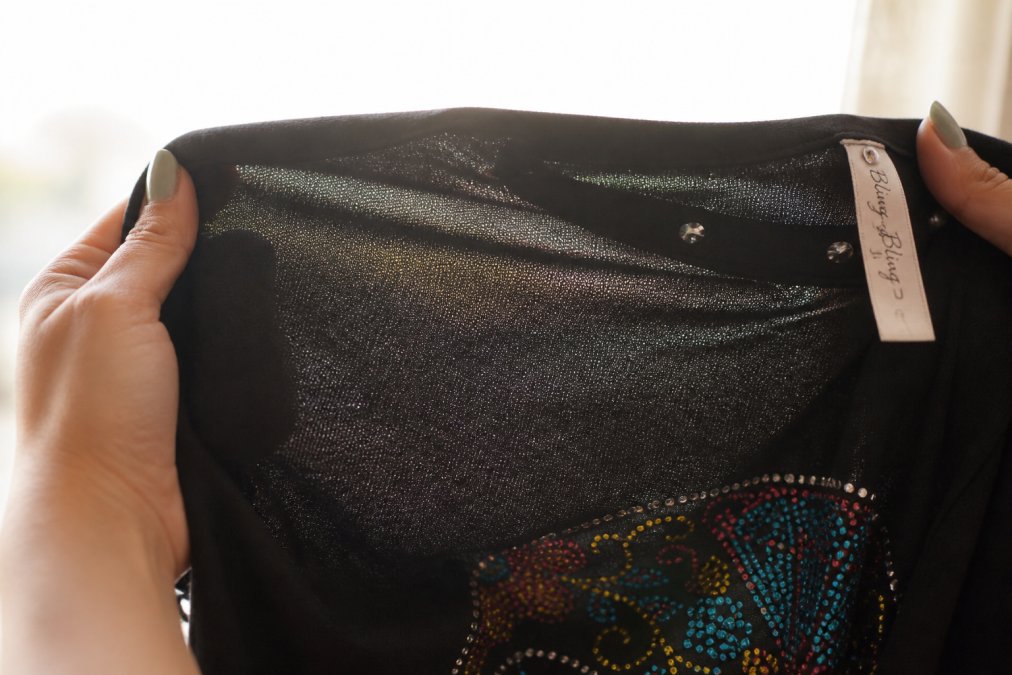
Product photos reveal fabric behavior that specifications alone cannot. Examine how the fabric hangs and how light passes through it.
Transparency is a major quality indicator. If you can see through a fabric that shouldn't be see-through, like a solid-colored dress or top, that signals low fabric density and poor quality. Drape, how the fabric falls and moves, also matters. Quality fabric drapes smoothly and naturally. Cheap fabric often looks stiff, bunchy, or clings awkwardly. In product photos, compare how the garment looks on a model versus on a hanger.
Signs of High Quality vs. Low Quality Garments
Once you understand the fabric itself, construction reveals quality.
Seam Construction and Stitch Density
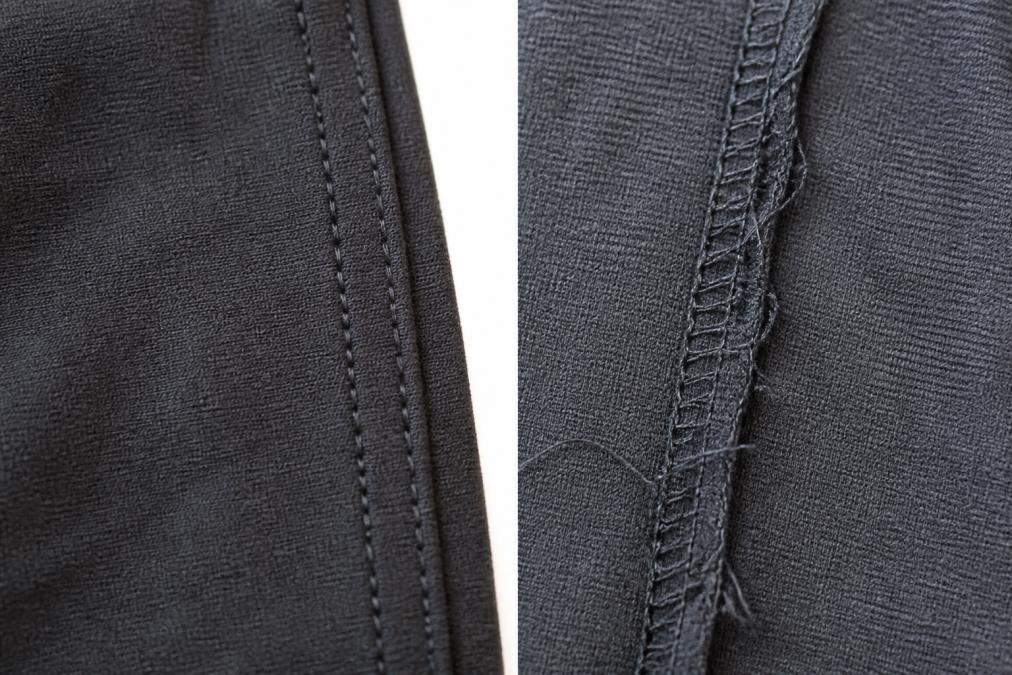
Seams determine whether something will hold together or unravel after a few wears. High-quality seams have tight, consistent stitch density. Low-quality seams have loose, irregular stitching or gaps between stitches. Zoom in on seams in product photos: armholes, side seams, shoulder seams.
Look for serging or overlock stitching on seam edges, the zigzag stitch that finishes raw edges and prevents fraying. This is a hallmark of quality construction. Budget garments often skip this step, leaving raw edges that fray immediately.
The seam allowance, the fabric between the stitch line and the edge, should be generous (typically 5/8 inch or more). Narrow seam allowances are a cost-cutting measure that reduces durability. Check multiple seams in product photos. If some look tight and others loose, that signals inconsistent quality control.
Buttonholes, Buttons, and Hardware
Buttons and buttonholes are where cheap garments often fail first. Buttonhole reinforcement prevents holes from tearing with use. Quality garments have reinforced buttonholes with extra stitching creating a small rectangular or oval reinforced area. Cheap garments have simple, unfinished buttonholes that tear easily.
Quality buttons have weight and substance. Cheap plastic buttons feel hollow and break easily. In photos, look for buttons that appear solid and well-attached.
Hardware, zippers, snaps, hooks, clasps, should feel substantial. Metal zippers are more durable than plastic ones. Zippers should be sewn securely with reinforcement at stress points. Examine how zippers are attached in product photos.
Hem Finishing and Pattern Matching
Quality hems are sewn with tight, even stitches. The hem finish should be clean, either a simple folded edge, bound edge, or rolled hem. Cheap garments have uneven stitching, visible loose threads, or raw, unfinished edges.
Pattern matching separates quality from mediocre. If the garment has stripes, checks, or a directional print, the pattern should align at seams. Misaligned patterns signal rushed manufacturing and low quality control. In product photos, look at full-body shots and zoom in on seams where patterns meet.
Is It Safe to Buy Clothes Online: Red Flags to Avoid
Online shopping carries real risks. Knowing what to avoid protects you from wasting money on poor-quality merchandise.
Spotting Manufacturing Faults in Product Photos
Manufacturing faults appear in product photos if you know what to look for. Common issues include loose threads, uneven seams, stains, discoloration, and stitching errors.
Examine every visible seam. Look for loose threads hanging from seams and puckering or bunching, which indicate the fabric was pulled or tension was wrong during sewing. Check overall symmetry: Are both sleeves the same length? Is the neckline centered? Does the hem sit evenly? Asymmetry suggests manufacturing defects.
Stains, discoloration, or visible damage in product photos are obvious red flags. Many retailers now provide multiple angle photos and close-ups. Use these extensively. If a retailer only provides one or two distant photos, that's suspicious.
Identifying Trustworthy Sellers
Look for retailers that provide detailed product information: exact fiber content, fabric weight, care instructions, and detailed measurements. This transparency signals confidence in their product.
Check the return policy. Trustworthy retailers offer generous return windows (at least 30 days) and free or low-cost returns. Read customer reviews strategically. Look for patterns rather than individual opinions. If multiple reviewers mention that a garment is "thin," "cheap-feeling," or "falls apart quickly," those are reliable signals.
Look for customer photos in reviews. Real people wearing garments show how they actually look and fit. Hot Possessions & Glitter Girls prioritizes these transparency markers. With over 4,000 apparel items, they provide detailed fiber content, sizing information, and ship in 1-2 days so you can evaluate quality quickly. Their flexible payment options like Afterpay and Klarna let you try items with less financial risk upfront.
Evaluating Online-Specific Quality Indicators
Online shopping requires evaluating quality signals that don't exist in physical stores.
Product Photography and Multiple Angles
The quality of product photography correlates with product quality. Retailers committed to quality invest in professional photography that shows garments accurately.
Look for photos taken in consistent, natural lighting. Multiple angle shots are essential, front, back, sides, and close-ups of details. Photos showing the garment on a model and on a hanger are both valuable. The hanger shot shows construction and natural hang. The model shot shows fit and drape.
Zoom capability matters. Can you click on photos to see high-resolution close-ups of seams, buttons, and fabric texture? Quality retailers provide this.
Customer Reviews and Real-Wear Photos
Customer reviews connect you to how garments actually perform. Focus on reviews mentioning durability, fit, and fabric quality. A reviewer saying "I've worn this 20 times and the seams are still holding strong, no pilling" is more useful than "This shirt is super soft."
Real-wear photos from customers are invaluable. These show how the garment looks on different body types and whether it holds up over time. Pay attention to reviews mentioning care and longevity. If multiple reviewers say a garment shrunk significantly or faded after a few washes, that's a critical quality issue. Look for reviews from verified purchasers.
Price-to-Quality Ratio: What You Should Actually Pay
Price and quality don't always correlate, but they should. A quality t-shirt typically costs $20-40. A quality dress usually ranges from $40-80. A quality jacket often costs $80-150 or more.

Suspiciously cheap prices are a warning sign. If a garment is priced significantly below market rates, corners were likely cut somewhere. However, premium pricing doesn't guarantee quality either. Evaluate the actual garment, not just the price tag.
Hot Possessions & Glitter Girls offers strong value: quality apparel at accessible prices, with free shipping on orders over $99 and flexible payment options. Their items typically range from $24-26, which is reasonable for quality level and fast 1-2 day shipping.
Compare price against the specific garment's fiber content, construction details, and customer reviews. A $35 garment made from 100% cotton with reinforced seams and quality hardware is better value than a $25 garment made from thin polyester with loose stitching.
The Stretch Test and Fabric Recovery
Fabric recovery, how quickly fabric returns to its original shape after being stretched, is a sign of quality. High-quality fabric has good recovery. Low-quality fabric loses its shape permanently or takes a long time to recover. This is why cheap t-shirts develop stretched-out necklines and armholes after a few wears.
In product photos, look for images showing the garment being stretched. If the fabric snaps back immediately, that's a quality signal. Fiber content affects recovery. Pure natural fibers like cotton have moderate recovery. Synthetic blends with spandex or elastane have excellent recovery. A garment with 5-10% spandex will maintain its shape much better than one without.

When you receive a garment, do the stretch test yourself. Gently pull the fabric and release it. Quality fabric recovers instantly. Poor-quality fabric stays stretched or recovers slowly.
Buying quality clothes online is entirely possible when you know what signals to look for. Fiber content, fabric weight, seam construction, and manufacturing details all tell a story about whether a garment will last. Start by reading product descriptions carefully, examining photos from multiple angles, and paying close attention to customer reviews. Hot Possessions & Glitter Girls makes it easy with transparent product information, detailed photos, and 1-2 day shipping that lets you evaluate quality quickly. Use this framework, and you'll make confident purchasing decisions that result in garments you'll wear for years.
Frequently Asked Questions
How can I check fabric quality online before buying?
Start by reading the fiber content label, natural fibers like cotton and linen typically last longer than low-quality synthetics. Look for GSM (grams per square meter) information, which indicates fabric weight and durability. Examine product photos for transparency, drape, and visible stitching quality. Check if the retailer provides care instructions and material composition details. Customer reviews with photos showing how garments hold up after washing are invaluable. High-quality retailers like Hot Possessions & Glitter Girls provide detailed descriptions and multiple product angles so you can assess construction before purchasing.
What are the signs of high quality vs. low quality garments?
Quality garments have tight, even stitch density (typically 8-12 stitches per inch), reinforced buttonholes, and secure hardware. Hems are finished smoothly with no loose threads, and patterns match at seams. Low-quality pieces show loose or uneven stitching, pilling after one wash, buttons that fall off easily, and hems that fray or come undone. Natural fiber blends and proper seam allowances indicate durability. Fast fashion often skips reinforcement at stress points like armholes and crotch seams. Premium pieces invest in finishing details that prevent unraveling and extend garment life.
Is it safe to buy clothes online from retailers I don't know?
Yes, if you research the retailer first. Look for clear return policies, customer reviews with real photos, and detailed product descriptions including fiber content and care instructions. Established boutiques like Hot Possessions & Glitter Girls ship within 1-2 days and offer flexible payment options like Afterpay and Klarna, which protect you if items don't meet expectations. Avoid sellers with no reviews, vague sizing charts, or photos that hide seam quality. Check if the retailer has transparent sizing information and customer testimonials. Trustworthy online retailers provide multiple contact methods and honor returns without penalty.
What should I look for in product photos to determine quality?
Examine photos from multiple angles, front, back, and close-ups of seams, buttons, and hem finishes. High-quality retailers show stitching detail, fabric texture, and how garments drape on different body types. Look for consistency in photos (not blurry or poorly lit), which suggests the seller invests in presentation. Check if there are customer-submitted photos showing real-wear durability. Avoid listings with only flat-lay shots that hide construction details. Photos that reveal seam allowances, pattern matching, and button reinforcement indicate a quality-focused brand. The more transparent the photography, the more confident you can be in the garment's construction.
This article was written using GrandRanker