





Table of Contents
- Why Buying Plus Size Clothes Online Is Different
- Your Plus Size Measurement Guide: Get It Right First
- How to Read Size Charts for Plus Size Clothing
- Fabric Composition: What to Look For When Shopping Plus Size Clothes Online
- Styling Tips to Find Flattering Plus Size Silhouettes
- Virtual Fitting Tools and AI: The New Way to Shop
- Plus Size Clothing Return Policy Tips Every Shopper Needs
- Conclusion
Last Updated: August 15, 2026
Why Buying Plus Size Clothes Online Is Different
Shopping for plus size clothes online presents unique challenges: you cannot try anything on, sizing varies wildly between brands, and photos often misrepresent fit. At Hot Possessions & Glitter Girls, we hear the same frustration repeatedly, the size chart said one thing, the fit said another.
This guide covers how to measure yourself accurately, decode size charts, evaluate fabric quality, and protect yourself with smart return-policy habits. By the end, you will have a repeatable system for buying plus size clothes online with confidence.
The core issue is lack of standardization. A size 2X from one brand fits like a 1X from another. Until the industry adopts universal sizing, the shopper who understands measurements, fabric behavior, and retailer reliability will always come out ahead.
Your Plus Size Measurement Guide: Get It Right First
Accurate body measurements are the single most important tool any plus-size online shopper has. Without them, every size chart is a guess.
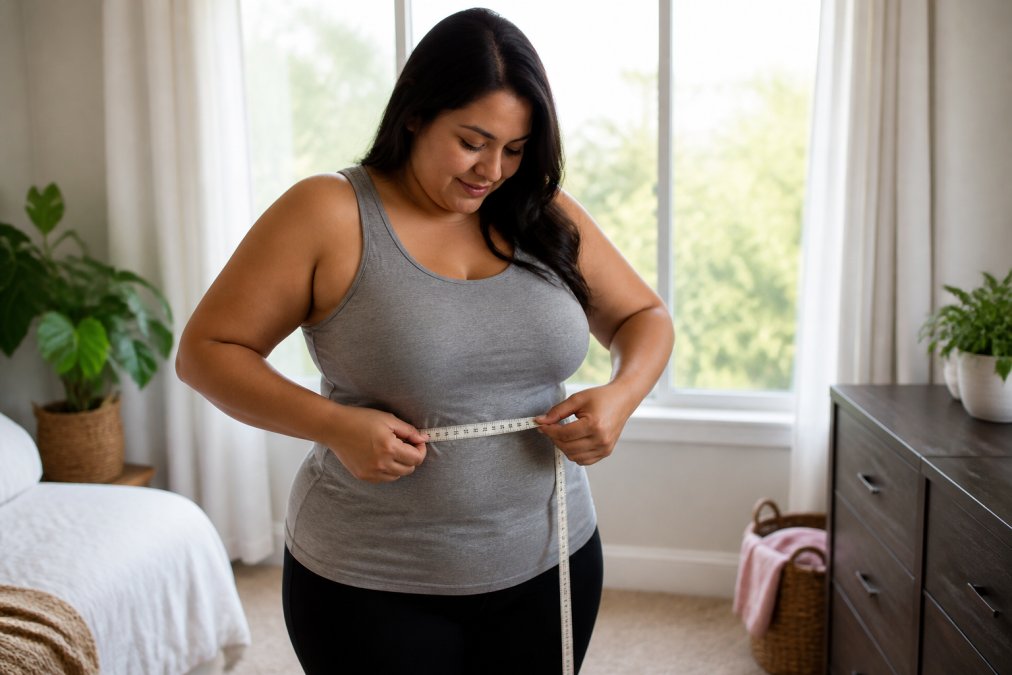
Plus size measurement guide essentials: A plus size measurement guide is a set of body measurements taken with a soft tape measure that you compare against a brand's garment dimensions to predict fit. You need four core numbers: bust, waist, hips, and inseam.
Take measurements in fitted underwear or a thin layer. Never measure over bulky clothing. Write the numbers down and revisit them every few months.
How to Measure Bust, Waist, and Hips Accurately
Bust: Wrap the tape measure around the fullest part of your chest, keeping it parallel to the floor. Do not pull it tight; the tape should sit snugly without compressing tissue.
Waist: Find your natural waist by bending sideways. The crease that forms is your natural waistline, typically an inch or two above your navel. Measure there, not at the hip.
Hips: Stand with feet together and measure around the fullest part of your hips and seat, usually seven to nine inches below your natural waist. One common mistake: measuring the hips too high.
Inseam, Rise, and Other Fit Measurements That Matter
For pants, jeans, and jumpsuits, inseam and rise determine whether a garment will work.
Inseam is the distance from your crotch seam to the bottom of your ankle, measured along the inner leg. This tells you whether a pant labeled "regular" or "long" will hit the right spot.
Rise is the distance from the crotch seam to the top of the waistband. A high rise sits at or above the natural waist; mid-rise sits at the hip bone; low-rise sits below it. For plus-size shoppers, rise is often the difference between a pant that stays put and one that constantly pulls down.
| Measurement | Where to Measure | Common Mistake |
|---|---|---|
| Bust | Fullest part of chest, parallel to floor | Pulling tape too tight |
| Waist | Natural waist crease, not navel | Measuring at the hip instead |
| Hips | Fullest part, 7-9 inches below waist | Measuring too high |
| Inseam | Crotch to ankle, inner leg | Measuring outer leg instead |
| Rise | Crotch seam to waistband top | Skipping this measurement entirely |
How to Read Size Charts for Plus Size Clothing
Size charts are only useful if you know how to read them correctly. Most brands publish a chart mapping body measurements to label sizes.
Vanity Sizing and Why Numbers Vary by Brand
Vanity sizing is the practice of labeling garments with smaller numbers than their actual cut. A size 18 from one retailer may be cut identically to a size 22 from another. According to The Fashion Institute of Technology's research on sizing standards, there is no federally mandated clothing size standard in the United States, which means every brand sets its own measurements.
The fix is straightforward: ignore the label number and shop by your measurements against the garment's listed dimensions.
Using Customer Reviews to Verify Fit
Customer reviews are underused fit-verification tools. When reading reviews for plus size clothes, filter for reviewers who share their measurements or body type. A review stating "I am a 42-inch bust and 48-inch hip and this fit perfectly with room to spare" is worth more than ten generic reviews.
Look for patterns. If multiple reviewers with similar measurements say a piece runs small in the shoulders or short in the torso, believe them. Photo reviews are especially valuable, showing how the garment actually drapes on a real body.
Fabric Composition: What to Look For When Shopping Plus Size Clothes Online
Fabric composition determines how a garment fits, moves, holds its shape after washing, and whether it will be comfortable over extended wear.
Stretch fabrics are ideal for fitted silhouettes. Look for spandex or elastane content, typically 3 to 5 percent. Even a small amount adds significant recovery and ease of movement. For bodycon dresses, leggings, and fitted tops, spandex will conform to your shape rather than creating stress points.
Natural fibers like cotton and linen breathe well but have little inherent stretch. A 100 percent cotton blouse will not give at the shoulder seam. If buying fitted cotton, size up slightly.
Polyester and blends hold their shape well and resist wrinkles. The trade-off is breathability. For warmer climates, poly-heavy fabrics can feel uncomfortable after hours of wear.
Fabric drape matters for flowy styles. Chiffon, rayon, and satin drape softly and skim the body. Jersey knits cling. Check product photos to assess drape: structured photos suggest stiffer fabric; flowing photos suggest softer drape.
According to the Federal Trade Commission's Textile Fiber Products Identification Act guidelines, all clothing sold in the US must disclose fiber content by percentage. If a product listing omits this, that is a red flag.
Styling Tips to Find Flattering Plus Size Silhouettes
Flattering means a garment that fits well, moves comfortably, and reflects how you want to present yourself, not necessarily "slimming."
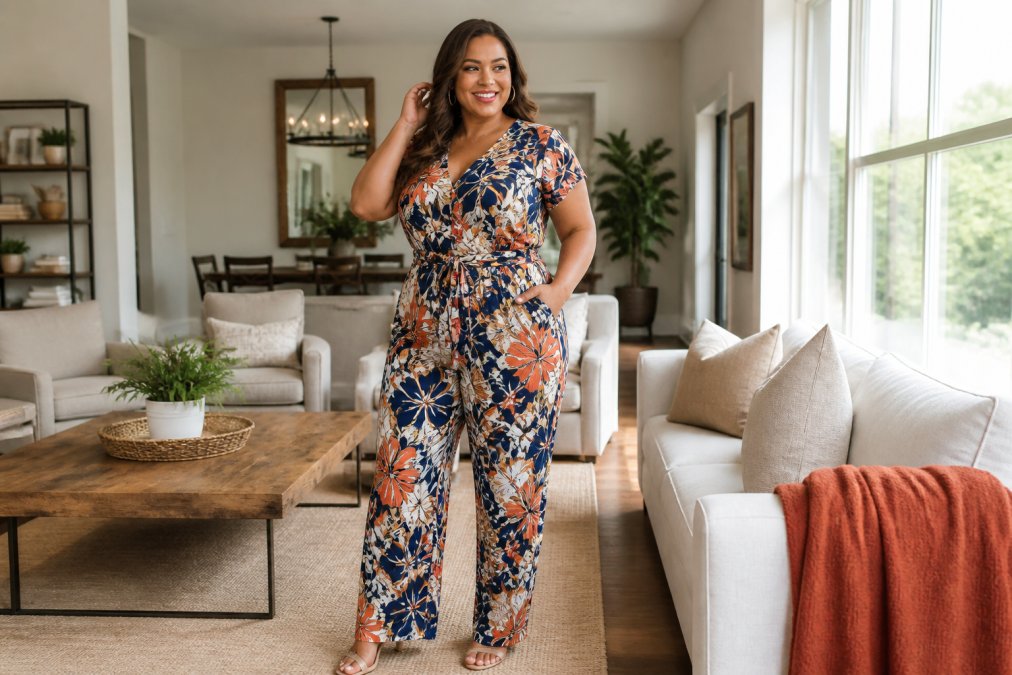
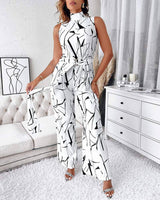
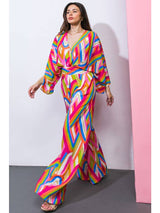
Defined waist styles work well for most body shapes because they create visual structure. Wrap dresses, belted jumpsuits, and fit-and-flare silhouettes draw the eye to the waist. The Women Designer Print Jumpsuit and the Womens Jumpsuit Abstract Design are both cut to provide a sculpted fit with a flattering silhouette.


Empire waist and A-line cuts skim over the hip and thigh, which many plus-size shoppers find more comfortable. These styles also photograph well and translate reliably from product image to real-life fit.
Prints and patterns are a personal choice. A well-fitting garment in a print you love will always look better than a plain piece that fits poorly.
Building a Versatile Plus Size Capsule Wardrobe
A capsule wardrobe is a small, intentional collection of pieces that mix and match across multiple outfits. For plus-size shoppers buying online, this reduces return risk by encouraging purposeful purchases.
A practical plus size capsule wardrobe includes:
- Two to three fitted basics in neutral tones
- One or two statement pieces with print or texture
- A versatile layering piece such as a duster cardigan
- One or two jumpsuits or rompers that transition from day to evening
- One reliable pair of well-fitting pants with correct rise and inseam
The Women Romper with its belted waist is a strong capsule anchor because it reads as both casual and polished. At $26, it is an accessible starting point.

Virtual Fitting Tools and AI: The New Way to Shop
Virtual fitting tools are reshaping how shoppers approach online sizing. These tools use body measurements, sometimes supplemented by a photo or body scan, to generate predicted fit for a specific garment.
Some retailers offer AI-powered size recommendation engines that analyze your measurements alongside past purchase and return data to predict which size will fit best. According to the National Institute of Standards and Technology's work on 3D body scanning standards, body scanning technology is becoming increasingly accessible for retail applications.
What virtual tools cannot replace is the nuance of fabric behavior on a specific body. A tool might correctly predict that a size 2X fits your measurements, but it cannot tell you that the shoulder seam will sit too far forward for your frame. Customer reviews and detailed garment dimensions still matter.
How to use virtual fitting tools effectively:
- Enter your measurements accurately
- Note whether the tool uses body measurements or garment dimensions
- Cross-reference the recommendation with customer reviews from shoppers with similar measurements
- If the tool recommends a size conflicting with your measurements, trust your measurements
AI sizing tools are trained on return data, which means they skew toward frequently-shopping body types. If you are at the upper end of a brand's size range, predictions may be less reliable. Treat recommendations as one input, not a guarantee.
Plus Size Clothing Return Policy Tips Every Shopper Needs
Return policies are the safety net that makes online plus-size shopping viable. A generous return policy means a sizing mistake costs you time, not money.
Check these specifics before placing any order:
- Return window: How many days do you have? Fourteen days is common; some retailers offer thirty or more.
- Condition requirements: Most require tags attached and unworn condition.
- Return shipping cost: Who pays? If the retailer deducts return shipping from your refund, factor that into the item's effective cost.
- Sale and clearance exclusions: Many retailers make sale items final sale.
- Buy-now-pay-later returns: If you used Afterpay, Klarna, or similar services, confirm how returns affect your payment plan.
A practical habit: screenshot the return policy page at purchase. Policies can change, and having a record protects you if disputes arise.
Hot Possessions & Glitter Girls ships orders in one to two days and offers flexible payment options including Afterpay and Klarna. A first-order discount of 10% with code GET10 reduces risk on your first purchase.
Buying plus size clothes online does not have to be frustrating. Shoppers who get it right consistently know their measurements, read size charts against garment dimensions rather than label numbers, and check fabric content before purchasing. Hot Possessions & Glitter Girls makes this easier with over 4,000 on-trend styles, detailed product listings, and flexible payment options through Afterpay and Klarna. Get started with code GET10 for 10% off your first order and find plus size clothes that actually fit the way they should.
Frequently Asked Questions
How do I accurately measure myself for online clothing shopping?
Use a soft fabric tape measure and wear form-fitting clothing or measure over bare skin. Measure your bust at the fullest point, your waist at the narrowest point above your navel, and your hips about 7 to 9 inches below your natural waist. Write down all three measurements in inches before checking any size chart. Taking measurements standing upright against a wall helps keep the tape level and gives you the most accurate numbers for buying plus size clothes online.
Why do plus size clothing brands have different sizing charts?
There is no single federal standard for clothing sizes in the United States, so each brand sets its own measurements. Vanity sizing also plays a role, brands may label a garment with a smaller number to appeal to shoppers, even when the actual garment dimensions are larger. This is why comparing your body measurements in inches directly against each retailer's size chart matters far more than relying on the number or letter on the label.
What should I look for in online return policies for plus size clothing?
Check the return window first, 30 days is standard, but some retailers offer 60 or 90 days. Confirm whether returns are free or if you pay return shipping. Look for whether sale items are final sale, since that affects your risk. If you use a buy-now-pay-later option like Afterpay or Klarna, contact the provider before initiating a return, because installment payments may continue until the retailer processes your refund.
How can I tell if a fabric will be flattering for my body type?
Look for fabric compositions that include a small percentage of elastane or spandex (2% to 5%) for stretch and recovery, which helps garments hold their shape on curves. Jersey knit and ponte fabrics offer good drape without clinging. Avoid stiff fabrics like thick canvas or unlined linen if you want a smooth silhouette. The product description should list the fabric composition, if it does not, check customer reviews for comments on how the material feels and moves.
This article was written using GrandRanker