





Table of Contents
- Why Real Customer Clothing Reviews Matter
- How to Spot Fake Reviews on Retail Sites
- Signs of a Fake Clothing Website
- How to Check If a Shopping Website Is Legit
- How to Evaluate Real Customer Reviews for Clothing Fit and Quality
- Common Mistakes When Trusting Online Clothing Reviews
- Conclusion
Last Updated: August 24, 2026
Why Real Customer Clothing Reviews Matter
Finding authentic customer feedback before buying clothes online is the difference between a great fit and wasted money. Real customer clothing reviews fill the gap left by product photos and retailer descriptions by showing how actual people experienced fit, quality, and durability. The problem is that not all reviews are genuine. Fake reviews, manipulated ratings, and paid testimonials clutter online retail sites, so learning to distinguish real feedback from fabricated ones protects your purchase decisions.
Real customer clothing reviews reveal details no product description captures: how a size runs compared to other brands, whether fabric shrinks after washing, if seams hold up to regular wear, and whether color matches photos. These specifics help you make confident choices, especially when shopping online where you can't try something on first.
How to Spot Fake Reviews on Retail Sites
Spotting fake reviews requires looking beyond the star rating and reading what reviewers actually wrote. Understanding common manipulation tactics helps you identify which reviews come from genuine customers.
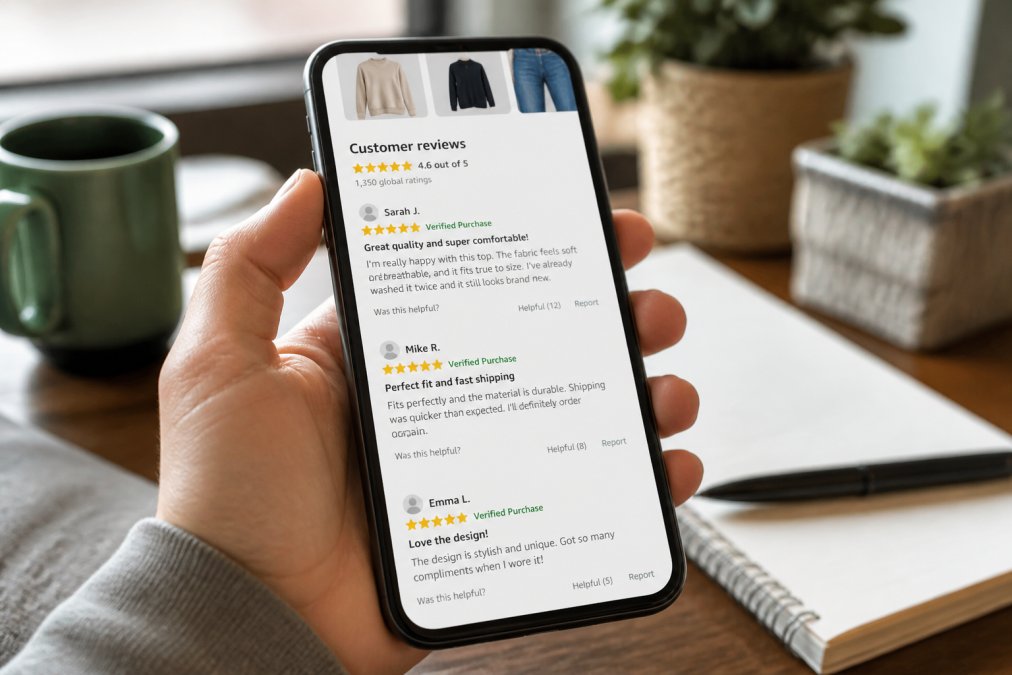
Language and Writing Patterns That Signal Fake Reviews
Authentic customer feedback uses natural, conversational language with specific details: "The fabric is softer than I expected" or "I'm usually a size 8 and this ran small, so I exchanged it for a 10." Real reviewers mention both positives and negatives using contractions and personal pronouns naturally.
Fake reviews often read like templates. They use overly formal language, excessive punctuation, or repetitive phrasing like "This product is amazing!" followed by "I highly recommend!" Paid reviewers sometimes use identical language across different products. Some fake reviews lack any specific details: "Great item, very happy with my purchase." Another red flag is marketing language that sounds like it came from the brand itself, phrases like "premium quality" or "perfectly designed" appearing repeatedly across multiple reviews suggest coordination rather than organic feedback.
Timing, Frequency, and Review Clustering
Pay attention to when reviews are posted. If a product suddenly receives 20 five-star reviews within 48 hours, that's suspicious (the FTC). Legitimate reviews arrive gradually as real people make purchases and take time to leave feedback. A sudden spike, especially with similar ratings and language, suggests purchased fake reviews.
Check whether reviews cluster around certain dates or spread throughout the year. Authentic reviews follow natural distribution patterns. Fake reviews often appear in waves, bursts of activity followed by silence, then another burst, indicating batch purchases rather than organic feedback.
Signs of a Fake Clothing Website
Certain characteristics separate legitimate e-commerce businesses from scam operations before you enter payment information.
Visual Red Flags and Design Quality
Legitimate clothing retailers invest in professional website design with clean layouts, high-quality product photos, and intuitive navigation. Fake websites often have sloppy design: blurry images, inconsistent fonts, or pages that don't load properly. Some use stolen photos from other retailers, you can reverse-image search any product photo to check if it appears on multiple websites.
Check overall professionalism: are product descriptions well-written or riddled with errors? Do prices seem unrealistically low? Do photos show actual clothing or generic stock images? Look at product selection too. Does the site offer thousands of items with wildly different styles at rock-bottom prices? That often signals a dropshipping scam. Legitimate boutiques curate collections around consistent aesthetics and quality standards.
Contact Information and Return Policy Transparency
Legitimate businesses make it easy to contact them with a physical address, phone number, and email support. Fake websites often list no contact information or only generic emails. Read return policies carefully. Real retailers have clear, customer-friendly policies because they want customers to feel confident. Scam sites often have vague policies or claim no returns at all.
Check whether the site clearly states shipping times and costs. Legitimate retailers are transparent about delivery details. Fake sites often hide shipping information until checkout or quote unrealistic delivery times they can't meet.
How to Check If a Shopping Website Is Legit
Before entering your credit card information, verify that the website is legitimate and secure.
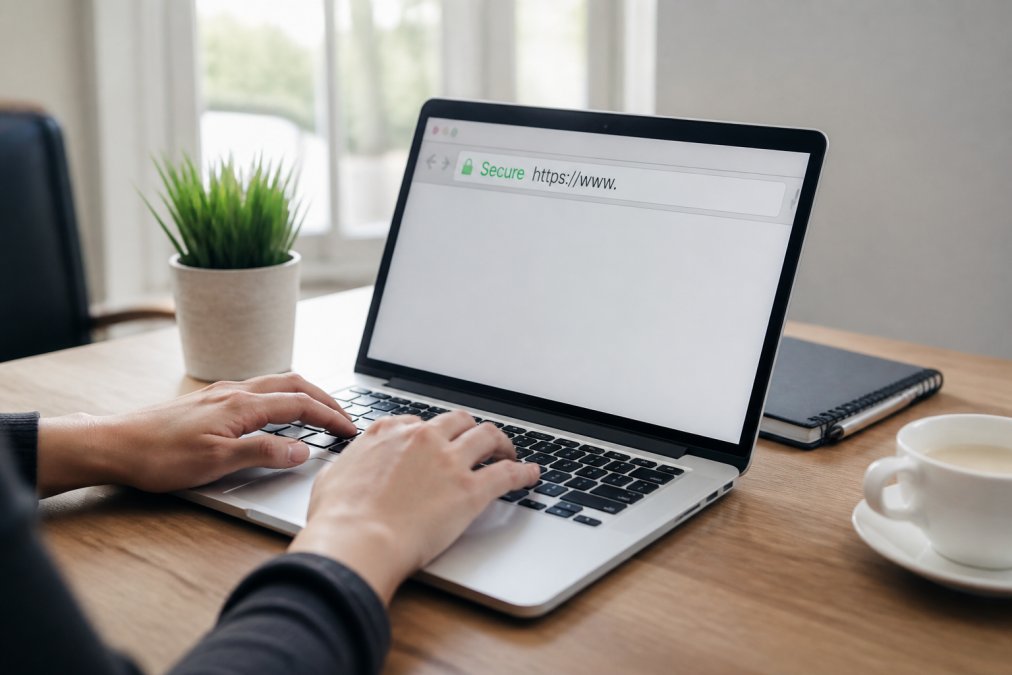
Verify SSL Certificates and Payment Security
Every legitimate website handling payments uses an SSL certificate to encrypt your data (cisa.gov). Check the URL in your browser: if it starts with "https://" (not just "http://"), the site has SSL encryption. You'll also see a small padlock icon next to the URL. The absence of HTTPS is a definite red flag, never enter payment information on a site without it.
Check what payment methods the site accepts. Legitimate retailers accept major credit cards, PayPal, and flexible payment options like Afterpay or Klarna. If a site only accepts wire transfers, cryptocurrency, or prepaid gift cards, that's a warning sign. Those methods offer no buyer protection.
Check Third-Party Verification Platforms
The Better Business Bureau (BBB) maintains ratings and complaint histories for businesses. Trustpilot aggregates customer reviews from verified buyers. Search the retailer's name on these platforms and look for patterns in complaints. A few negative reviews is normal, but repeated complaints about non-delivery, poor quality, or refusal to issue refunds are serious warnings. Pay attention to how the retailer responds to complaints, legitimate businesses address concerns while fake retailers often don't respond at all.
Use the FTC's guide to online shopping safety to learn more about verifying retailers and recognizing common scams. Search the brand name online along with words like "scam," "fraud," or "complaints." Check how long the business has been operating using domain lookup tools like WHOIS. A site registered last week is riskier than one operating for several years.
How to Evaluate Real Customer Reviews for Clothing Fit and Quality
Once you've confirmed that reviews are genuine, use them strategically to make smart purchasing decisions.
Look for Verified Purchase Badges and Product Photos
The most reliable reviews come from verified purchasers, people who actually bought the item from that retailer. Most platforms mark these with a "Verified Purchase" badge. Prioritize these over unverified ones. Pay special attention to reviews that include photos. When a customer posts a picture of themselves wearing the item or showing the garment up close, that's a strong credibility signal. Photos show actual color, fit, and fabric texture in real lighting.
Look for reviews from customers who've purchased multiple items from the retailer. Repeat customers have more experience with the brand's sizing and quality standards.
Analyze Review Specificity and Honest Criticism
The best reviews acknowledge both strengths and weaknesses. A reviewer might say: "The fabric is thicker than I expected and holds its shape well after washing, but the seams on the sleeves started coming loose after a month of regular wear." That's honest feedback far more useful than generic praise.
Look for reviews addressing your specific concerns. If you're worried about fit, find reviews mentioning sizing. If you care about durability, look for reviews discussing how the item held up over time. Notice whether reviewers mention sizing comparisons like "I'm 5'8" and usually wear a medium. I ordered a medium here and it fit perfectly." Be skeptical of reviews that seem designed to sell you something, emphasizing only positives and using marketing language.
Common Mistakes When Trusting Online Clothing Reviews
Even when reviews are verified as real, it's easy to misinterpret them. Don't assume one negative review means the product is bad. Look for patterns instead, if 20 reviews mention the same problem, that's meaningful. If one review complains about something no one else mentions, it's likely isolated.
Don't treat all reviewers as having the same standards. Try to find reviewers whose taste and expectations seem similar to yours. Avoid giving too much weight to reviews from people with very different body types, sizes, or style preferences. Don't ignore review dates either, fashion changes and inventory changes. Recent reviews are more reliable indicators of what you'll receive.
Don't assume high review volume equals reliability. A product with 500 reviews might have more fake reviews than one with 50. Focus on review quality and authenticity, not quantity.
Finding real customer clothing reviews requires skepticism and attention to detail, but the effort pays off in smarter purchases and fewer disappointments. By learning to spot fake reviews, verify retailer legitimacy, and extract genuine insights from authentic feedback, you gain confidence in your online shopping decisions. When you shop with retailers who encourage genuine customer reviews, you're buying from businesses that stand behind their products. Use the verification techniques in this guide to find those trustworthy retailers, then use the review analysis skills to make purchases you'll actually love.
Frequently Asked Questions
What are the most common signs that a clothing review is fake?
Fake reviews often use generic praise without specific details, contain repetitive language across multiple reviews, arrive in clusters on the same dates, or lack verified purchase badges. Real customer feedback typically includes honest criticism, specific product details like fabric texture or fit length, and natural variation in writing style and tone.
How can I tell if a clothing website is legitimate before shopping?
Check for an HTTPS connection (padlock icon in your browser), clear contact information and physical address, transparent return and refund policies, and professional website design. Verify the site through Better Business Bureau ratings, search for the brand name with 'reviews' or 'scam' to see what others say, and look for social media accounts with active engagement and customer responses. Legitimate retailers display customer photos, offer multiple payment methods, and have consistent brand messaging across all platforms.
How do I find real customer clothing reviews with actual product photos?
Filter reviews by 'verified purchase' status first, this confirms the reviewer actually bought the item. Look for reviews that include customer-uploaded photos showing the clothing worn or laid flat, which demonstrates real ownership. Pay attention to reviews that mention specific details like 'runs small' or 'the sleeves are shorter than expected,' and check the reviewer's history to see if they post genuine feedback on multiple products. Avoid reviews with only professional product images or stock photos.
What should I do if I find conflicting reviews about clothing fit and sizing?
Read multiple reviews and identify patterns rather than focusing on single opinions. If reviews consistently mention that a brand runs small, that's reliable feedback. Check the reviewer's body type or size range when available, a size small review from someone usually wearing medium is more relevant than a generic comment. Look for reviews mentioning the specific measurement details, compare them to the brand's size chart, and prioritize verified purchase reviews from customers with similar sizing needs to yours.
This article was written using GrandRanker