




Table of Contents
- The Trend Cycle: How Fashion Moves From Runway to Rack
- What Is Popular in Women's Fashion Right Now
- How to Identify Fashion Trends Before They Go Mainstream
- The Psychology Behind Why We Adopt Trends
- Best Ways to Shop New Arrivals Without Wasting Money
- Sustainable Trend Spotting: Building a Capsule Wardrobe That Lasts
- DIY Trend Adaptation: Making New Arrivals Work for Your Style
- Conclusion: Becoming Your Own Trend Forecaster
- Frequently Asked Questions
Last Updated: September 23, 2026
The Trend Cycle: How Fashion Moves From Runway to Rack
Knowing how to spot trendy new arrivals starts with understanding one thing: trends move in a loop, not a straight line. A look debuts on the runway, shows up on a celebrity, spreads through street style, and lands in stores months later. By the time it hits a big-box shelf, the cycle is already turning toward the next idea.
- Runway debut: designers show a silhouette or color months ahead
- Editorial pickup: magazines and fashion sites feature the look
- Street style and influencers: real people start wearing it
- Retail adoption: stores stock the trend at scale
- Mainstream saturation: the look peaks, then fades
The 20-Year Rule and Why It Still Works
The 20-year rule says styles tend to return roughly two decades after they first peaked. It works because a new generation discovers the look without the baggage of having worn it before.
What Is Popular in Women's Fashion Right Now
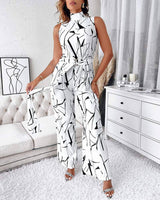
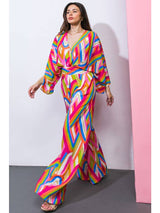
What is popular in women's fashion right now leans toward relaxed tailoring, soft neutrals, and bold accents. The strongest looks mix comfort with structure: think easy tops paired with sharp bottoms.
Here are the three areas to watch in 2026:
- Silhouettes: wide-leg pants, cropped jackets, and longline tops
- Color palettes: warm neutrals, deep greens, and pops of bright red
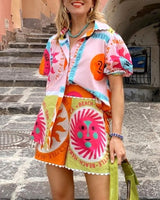
- Motifs: geometric prints, stars, and animal patterns
Silhouettes, Color Palettes, and Motifs Leading 2026
Silhouette is the shape a garment makes on the body. It is the fastest signal of a new trend, because a shape change is easy to spot even from across a room.
How to Identify Fashion Trends Before They Go Mainstream
You can identify fashion trends early by reading three signals at once: runway, street style, and social media. When all three point the same way, a trend is moving toward the mainstream.

Reading Runway, Street Style, and Social Media Signals
Runway shows you the idea first, but it is the least wearable stage. Street style shows you how real people adapt it. Social media shows you how fast it is spreading.
- Check runway coverage for repeated shapes or colors
- Watch street style photos for the same look on real people
- Track social media for rising mentions of a motif or silhouette
- Compare all three: agreement means the trend has momentum
- Buy early, while the style is still fresh and stock is full
The Psychology Behind Why We Adopt Trends
Most trend guides stop at what is trending. The more useful question is why a look spreads at all, because once you understand the mechanism, you can predict which new arrivals will stick and which will stall. This is the angle most trend coverage skips, and it is the one that turns you from a trend-follower into a trend-reader.
Four psychological forces do most of the work:
- Mere-exposure effect: Familiarity breeds liking. The more times you see a silhouette, on a feed, a stranger, a store window, the more "normal" and wearable it feels. This is why a shape that looked odd in March feels obvious by September. Practical use: if a new arrival looks strange to you but keeps reappearing, your discomfort is likely familiarity lag, not bad taste.
- Bandwagon and conformity pressure: People adopt a look partly to signal belonging to a group they want to join. Fashion researchers often describe this as trickle-down (elite to mass) or bubble-up (street to runway) diffusion. When a trend crosses from a niche group into a broad audience, adoption accelerates, then peaks fast.
- Distinctiveness and status signaling: The opposite pull. Once a look is everywhere, early adopters abandon it to protect their edge. This is the single best predictor of a trend's decline: when the people who started it move on, the trend is in its saturation phase.
- Identity and self-concept: We buy pieces that match who we think we are or want to be. A trend that aligns with an existing self-image gets adopted quickly; one that contradicts it gets resisted no matter how many influencers wear it.
How to Use This When You Shop
Read the adoption stage before you buy:
- Innovator stage (a few stylists, niche creators): highest risk, highest freshness. Buy only if it fits your existing wardrobe.
- Early adopter stage (visible on street style, growing on social): the sweet spot for most shoppers, fresh but not yet saturated.
- Early majority stage (mainstream retailers, mass ads): safe, wearable, but no longer distinctive.
- Late majority / saturation (everyone, deep discounts): the trend is ending. Buy only at markdown, and only if you genuinely love the piece.
This is also why the same silhouette can feel fresh in one city and dated in another: adoption speed varies by group, and groups move at different rates. If you shop across multiple retailers, compare how widely a look appears, a trend carried by one boutique is earlier than one carried by every big-box chain.
Best Ways to Shop New Arrivals Without Wasting Money
The best ways to shop new arrivals start with a plan, not a scroll. Set a budget, know your sizes, and filter for what is actually new before you browse.
A few habits keep your spending in check:
Girls Sleeveless Top - Aztec Motif →
- Set up alerts so you hear about fresh stock first
- Use filters to sort by new, size, and category
- Buy one or two trend pieces per season, not ten
- Check the return policy before you pay
- Use flexible payment options only when you can clear them
Setting Up Alerts and Filters for Fresh Inventory
Alerts and filters are the fastest way to cut through a large catalog. A new-arrivals filter shows you what just landed, so you are not scrolling through thousands of items hoping to find something fresh.
| Step | What to Do | Why It Helps |
|---|---|---|
| 1 | Turn on new-arrival alerts | See fresh stock first |
| 2 | Filter by your size | Skip items that won't fit |
| 3 | Sort by newest | Find current styles fast |
| 4 | Set a budget cap | Avoid impulse buys |
| 5 | Check returns | Buy with confidence |
Sustainable Trend Spotting: Building a Capsule Wardrobe That Lasts
Most trend content assumes you will buy your way into every new look. A more durable approach is to spot trends that fit an ethical, low-waste wardrobe, and to judge a new arrival by how well it will survive the next three seasons, not just this one. This is the angle almost no trend guide takes, and it is the one that saves the most money over time.
The Longevity Test: Five Questions Before You Buy a Trend Piece
Run every new arrival through these before checkout:
- Does it work with at least three outfits I already own? If not, it is a costume, not a wardrobe piece.
- Is the trend in its early or late stage? (See the psychology section.) Late-stage trends are usually on their way out, buy at markdown or skip.
- Is the fabric built to last? Natural fibers like cotton, linen, and wool generally hold shape and resist pilling better than low-quality synthetics, though blends and construction matter more than fiber alone. Check seams, lining, and hardware.
- Can I repair or alter it? A piece with generous seam allowance, replaceable buttons, or a simple cut is easier to keep alive for years.
- Would I still wear it if the trend disappeared tomorrow? If yes, it is a staple with trend appeal. If no, it is disposable.
Building a Capsule That Absorbs Trends
A capsule wardrobe is a small, curated set of pieces that mix and match across seasons. The goal is not to reject trends, it is to add them without rebuilding your closet every few months.
- Anchor with neutrals: pick two or three base shades (for example, cream, charcoal, and denim blue) so any trend color or motif has something to sit against.
- Choose versatile staples: a well-fitting top, a pair of pants that works dressed up or down, a jacket that layers, and one pair of shoes you can walk in.
- Add one or two trend pieces per season: a printed top, a statement accessory, or a single silhouette update. That is enough to read as current.
- Rotate, do not accumulate: store off-season pieces, and replace worn items instead of stacking new ones on top.
- Track cost-per-wear: divide the price by the number of times you realistically wear it. A $120 jacket worn 60 times costs $2 per wear; a $30 trend top worn twice costs $15 per wear. The cheaper item is often the more expensive one.
Spotting Trends That Align With Your Values
- Materials: look for natural or recycled fibers and durable construction over novelty finishes that pill or fade.
- Versatility: a trend that can be styled five ways beats a trend that only works one way.
- Resale value: recognizable, well-made pieces tend to hold resale value better than fast-fashion versions, which softens the cost of trying a trend.
- Repair and care: follow care labels, wash less often, and mend small issues early, this is the single biggest lever on how long a piece lasts.
This approach does not mean ignoring trends. It means choosing the ones that earn their place, and letting the rest pass.
DIY Trend Adaptation: Making New Arrivals Work for Your Style
DIY trend adaptation means taking a trend and making it fit your own look. You do not have to copy a runway outfit head to toe.
A few easy ways to adapt a trend:
- Add a trend color through a single accessory
- Pair a bold motif with plain, neutral pieces
- Mix a new silhouette with staples you already own
- Layer a trend top under a jacket you love
Conclusion: Becoming Your Own Trend Forecaster
Spotting trends early is a skill, and like any skill, it gets easier with practice. Watch the runway, the street, and social media together, and you will start to see patterns before they hit the shelves.
Frequently Asked Questions
How do you identify a fashion trend before it goes mainstream?
Watch runway collections and street style photos for repeating silhouettes, color palettes, and motifs. When the same design element shows up across three or more designers in one season, it is likely heading to ready-to-wear. Social listening tools and influencer posts can confirm momentum. Retailers like Hot Possessions & Glitter Girls often add trendy new arrivals within weeks of a trend breaking, so checking their new-arrivals section regularly gives you an early look.
What is the best way to track new arrivals at online boutiques?
Sign up for email alerts and follow the boutique on social media so you see drops as they happen. Use the site's new-arrivals filter and sort by date rather than scrolling through thousands of items. Many stores, including Hot Possessions & Glitter Girls, add fresh inventory daily and offer free shipping on orders over $99, which makes it easier to try new pieces without worrying about shipping costs.
How can you tell if a trend will last or fade quickly?
Trends with staying power usually show up in multiple price points and categories, from high-fashion to fast fashion, and they adapt classic silhouettes rather than replacing them. Fads tend to be loud, single-item driven, and peak within a few weeks. Look for trends that work with wardrobe staples you already own. If a new arrival can be styled three different ways with pieces you have, it is more likely to earn a permanent spot.
What is popular in women's fashion right now?
Current women's fashion leans toward relaxed tailoring, bold color palettes, and expressive motifs like Aztec and animal prints. Silhouettes are shifting toward softer, more versatile cuts that work for both casual and social occasions. Many shoppers are building capsule wardrobes around a few statement pieces, then adding trendy new arrivals to refresh the mix. Checking a boutique's curated new-arrivals section is the fastest way to see what is moving right now.