







Table of Contents
- What Makes Online Boutique Clothing Different
- How to Spot High Quality Boutique Clothing
- Unit Economics: Breaking Down the Real Cost
- Affordable Trendy Clothing With Free Shipping: What the Numbers Show
- Online Boutique Return Policies Explained
- Why Online Boutiques Fail: Lessons From the Market
- Is It Worth It? The Verdict
- Frequently Asked Questions
Last Updated: September 22, 2026
What Makes Online Boutique Clothing Different
Online boutique clothing stands apart from mass-market retailers through curated selections that reflect a specific aesthetic, higher quality control, and more intentional design choices.
Mass retailers optimize for volume and speed; boutiques optimize for fit, fabric, and finish. At Hot Possessions & Glitter Girls, we've built our selection around this principle: over 4,000 carefully chosen apparel items for women, juniors, and girls, with new on-trend pieces added daily to keep inventory fresh and give customers reason to return.

You pay more per item than at fast-fashion chains, but garments typically last longer, fit better, and feel more intentional. The real question is whether quality, durability, and fit justify the premium.
How to Spot High Quality Boutique Clothing
Quality in boutique clothing comes down to fabric composition, seam finishing, and overall construction.
Check the label for fiber content. Natural fibers like cotton, linen, and wool typically perform better than pure synthetics. Feel the weight and drape; flimsy fabric that feels thin or plasticky is a red flag.
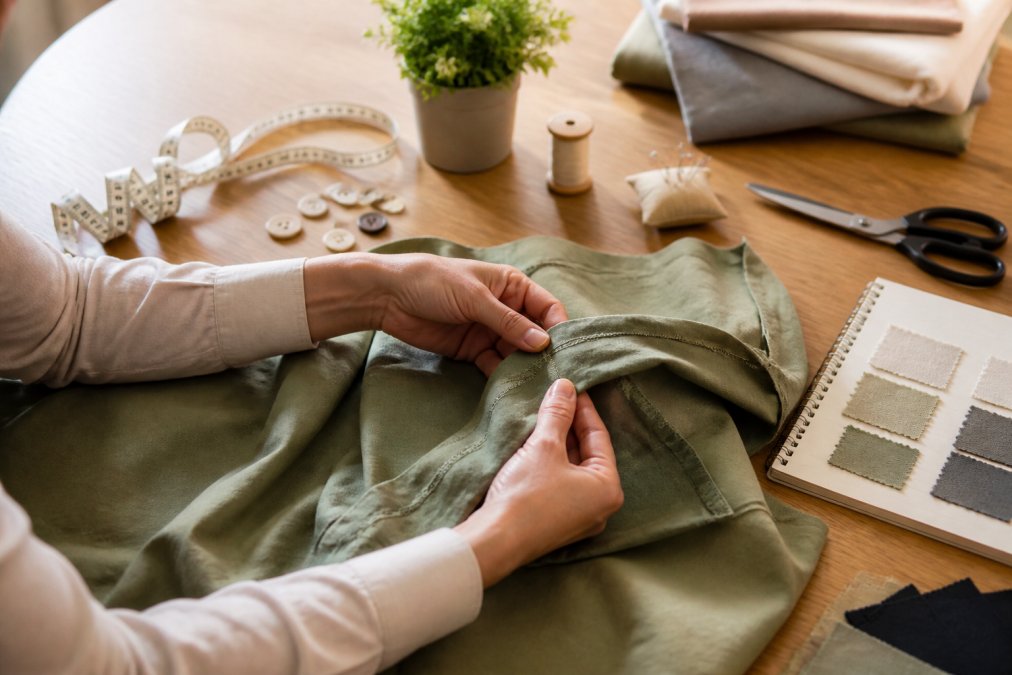
Inspect seams by turning the garment inside out. Quality seams are straight, tight, and consistent. Check hems for clean finishing, pocket attachment, and whether zippers sit flat without bunching.
Check overall fit for thoughtful details: darts that shape the garment, strategic seaming that flatters, and smooth closures.
Don't assume price alone signals quality. Examine the garment itself, not the price tag.
Unit Economics: Breaking Down the Real Cost
Understanding whether online boutique clothing is worth it requires calculating cost-per-wear and understanding hidden costs embedded in boutique pricing.
The Cost-Per-Wear Framework
A $50 boutique piece worn 50 times costs $1 per wear. A $20 fast-fashion item worn 10 times costs $2 per wear. The boutique piece is cheaper long-term.
Factor in shipping and returns. A $50 piece requiring a $6.99 return shipment becomes $56.99. If worn only 30 times, that's $1.90 per wear.
The Hidden Costs in Boutique Pricing
Boutique clothing costs more for reasons beyond quality. Customer acquisition cost (CAC) is significant: a boutique spending $2,000 monthly on marketing while selling 500 items embeds $4 in marketing cost per item, versus $0.50 for mass retailers.
Inventory carrying cost is higher for boutiques: unsold items tie up capital. If a boutique buys 100 units at $15 wholesale and sells only 70, losses on the 30 unsold units get absorbed into prices on items that sell.
Return and shipping logistics are real costs. Shipping a $50 item costs $4-8; return shipping another $4-8. If 20% of orders are returned, that's $1.60-3.20 in return cost per order. These costs get embedded in prices.
How Sourcing Model Affects Real Cost
Not all online boutiques source inventory the same way, and the sourcing model dramatically affects whether the price you pay is actually justified.
Dropshipping means zero inventory risk for the boutique but no quality control. Items come from mass-production factories; you pay boutique prices for fast-fashion quality. Dropshipping boutiques often have higher return rates.
Wholesale sourcing means the boutique buys finished goods at 40-50% off retail, holds inventory, and can inspect quality. Markup is typically 100-150% of wholesale cost, which is why items cost more than buying directly from the brand.
Private label sourcing allows boutiques to create custom designs unavailable elsewhere, justifying higher prices. However, it requires higher minimum orders and longer lead times, with higher risk if designs don't sell.
Ask: Are items exclusive to this boutique? If available elsewhere (wholesale), you're paying for curation. If exclusive (private label), you're paying for design. If dropshipped, you're paying markup on supplier price, rarely a good deal.
The Real Calculation
To determine if a specific piece is worth it, calculate: (Price + Shipping + Return Cost Risk) ÷ Estimated Wears = True Cost Per Wear.
For a $50 boutique piece with free shipping (order over $99 threshold met), a 20% return risk, and an estimated 40 wears: ($50 + $0 + $1.60) ÷ 40 = $1.29 per wear.
For a $20 fast-fashion piece with $5.99 shipping, a 30% return risk, and an estimated 15 wears: ($20 + $5.99 + $2.40) ÷ 15 = $1.89 per wear.
The boutique piece wins. But this only works if you actually wear the item 40 times. If you wear it 15 times, the math flips. The key is honest estimation of how much you'll actually wear something, not how much you hope you will.
Affordable Trendy Clothing With Free Shipping: What the Numbers Show
The term "affordable trendy" is marketing language that means different things depending on the boutique and your baseline. Understanding what affordable actually means requires looking at price points, quality tiers, and how free shipping changes the real cost equation.
Women Short Sleeve Rhinestone →
Price Point Tiers and What They Signal
Online boutiques typically occupy one of three price tiers: Budget boutiques ($15-$35) compete on price with marginal quality improvements; Mid-market boutiques ($35-$75) offer noticeably better quality with healthy margins; Premium boutiques ($75-$200+) feature private label or designer-adjacent items with high quality and distinctive designs.
The best tier depends on your wearing frequency. A $25 piece is worth it at 20 wears; a $65 piece at 40 wears; a $120 piece at 80 wears.
How Free Shipping Changes the Equation
Free shipping is a psychological and mathematical game-changer. When shipping is free on orders over a threshold, the effective cost per item drops, and customer behavior changes.
Free shipping thresholds encourage higher spending. A $99 threshold on a $50 item prompts customers to add items to qualify, increasing average order value. Psychologically, free shipping feels like a deal, even if item prices are marked up to account for it.
If a boutique absorbs $5 average shipping cost, they need to mark up items by $0.50-$1.00 per item to break even. Most mark up more, making free shipping profitable while passing costs to customers who don't hit the threshold.
Evaluating "Affordable" Claims
When evaluating "affordable trendy" claims, ask: What's the actual price range? What's the quality-to-price ratio compared to similar items? What's the shipping threshold? What's the return policy? Are items exclusive or available elsewhere?
The Real Cost of "Affordable"
Affordability is relative to quality and durability. A $45 dress worn 60 times costs $0.75 per wear; a $15 dress worn 15 times costs $1.00 per wear. Calculate cost-per-wear based on realistic wearing habits, not aspirational ones.
Online Boutique Return Policies Explained
Return policies are where many online boutique experiences fall apart. A generous policy removes friction. A restrictive one creates doubt.
Return policies vary. The longer the window, the less pressure you feel to decide immediately. That matters for items you're unsure about, especially if fit is uncertain.
The mechanics matter too. Can you return items to a physical location, or only by mail? Do you pay for return shipping, or is it covered? Do you get a full refund, or store credit? These details add up.
Some boutiques require items to be unworn and unwashed. The stricter the condition, the higher the return risk for the customer. If you're buying something to try on and wear once before deciding, a strict policy penalizes you.
A common mistake customers make is not checking the return policy before buying. By the time you realize the fit is off, you've already made the purchase. Reading the policy upfront takes two minutes and saves frustration later.
Why Online Boutiques Fail: Lessons From the Market
Not every online boutique succeeds. Understanding why some fail offers insight into what separates the winners from the rest.
The most common reason is poor curation. A boutique that tries to be everything to everyone ends up being nothing to anyone. Successful boutiques have a clear point of view. They know their customer and make intentional choices about what to stock. Failed boutiques add items randomly, hoping something sticks. The result is a confusing, unfocused shopping experience.
A second reason is inventory management. Boutiques that overstock on items that don't sell quickly run out of cash. Items that don't move sit in inventory, taking up resources and capital. Successful boutiques turn inventory faster. They add new items regularly and clear slow movers quickly. This requires discipline and market awareness.
Shipping and return costs also sink boutiques that don't plan for them. If you offer free returns and free shipping without factoring those costs into pricing, your margins disappear. Many boutiques fail because they underestimated the operational cost of customer service.
A fourth factor is brand identity. Boutiques that don't communicate a clear brand story struggle to stand out. The market is crowded. Customers choose boutiques based on aesthetic, values, or a specific need. Boutiques that don't articulate why they exist beyond "we sell clothes" don't build loyalty.
Finally, many boutiques fail because they don't invest in customer retention. Acquiring a new customer is expensive. Keeping an existing customer is much cheaper.
Is It Worth It? The Verdict
Whether online boutique clothing is worth it depends on what you value and how you shop.
Frequently Asked Questions
How can you tell if an online boutique clothing store is high quality?
Look for consistent seam finishing, reinforced stress points, and natural fiber blends or quality synthetics like the 92% polyester/8% spandex blend used in durable rompers. Check customer reviews for mentions of garment durability after multiple washes. Examine product photography for detail shots of construction. Boutiques that show fabric composition and care instructions upfront typically maintain higher quality control standards than those hiding these details.
What is the cost-per-wear calculation for online boutique clothing?
Divide the item's price by the number of times you'll realistically wear it. A $26 rhinestone tee worn 40 times costs $0.65 per wear; worn 10 times, it costs $2.60. Online boutique pieces with better fabric composition and seam finishing often justify higher upfront costs because they last longer, lowering your cost-per-wear compared to fast fashion items that deteriorate after 5-10 wears. Track your actual wearing patterns to calculate true value.
Are online boutique return policies typically buyer-friendly?
Return policies vary significantly between boutiques. Before buying, confirm the return window, whether return shipping is free or paid, and if refunds process immediately or after inspection. Always read the policy before checkout, this protects you if sizing or quality doesn't match expectations.
How does inventory turnover affect whether boutique clothing is worth buying?
Boutiques with fast inventory turnover add fresh styles regularly, meaning you're getting current trends rather than leftover inventory. This supports the curated collection model where each piece is handpicked for relevance. However, fast turnover can mean limited restocks if an item sells out. Check whether the boutique offers a 'new arrivals' filter or email notifications so you can access fresh inventory before it depletes, ensuring you're buying current fashion rather than clearance stock.