





Table of Contents
- Why Clothing Size Charts Matter More Than Size Labels
- How to Measure Your Body for Clothing Accurately
- How to Read a Garment Size Chart Like an Expert
- Tips for Buying Plus Size Clothes Online with Confidence
- Understanding Why Clothing Sizes Differ by Brand and Country
- Finding Reliable Size Charts: What to Look For
- Using Size Calculators and Conversion Tools
- What to Do When Your Measurements Fall Between Two Sizes
Last Updated: August 23, 2026
Why Clothing Size Charts Matter More Than Size Labels
A size label is a promise that depends entirely on who made it and when. The same size label means wildly different things across brands, countries, and even within a single brand's product lines. This is why clothing size charts have become the real arbiter of fit, not the label itself.
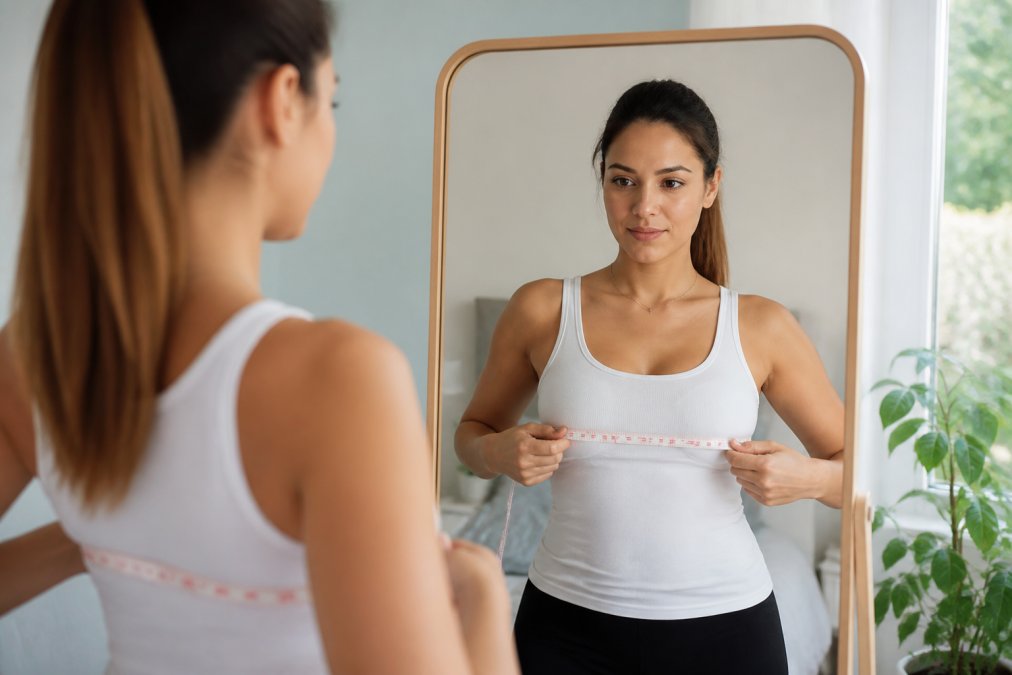
When you shop online, you can't try anything on or feel how the garment drapes. What you can do is compare your body measurements to the garment dimensions listed in a clothing size chart, the only direct line between your body and the fit you'll receive.
Hot Possessions & Glitter Girls understands this tension. With over 4,000 apparel items in inventory, accurate size charts aren't optional, they're essential. When a customer orders a dress, romper, or signature bling tee without trying it on first, the size chart is the contract between expectation and reality.
Most retailers don't maintain reliable size charts. Some are outdated, others vague, and many fail to account for the actual garment dimensions, bust circumference, waist measurement, hip measurement, and inseam length, that determine fit. This guide walks you through finding accurate clothing size charts online, measuring yourself correctly, and interpreting what those numbers mean.
How to Measure Your Body for Clothing Accurately
The foundation of finding the right size online is measuring yourself correctly. You need three things: a soft measuring tape (not a rigid ruler), a mirror, and ideally a second person to help.
Stand straight but relaxed. Don't hold your breath or suck in your stomach. Measure where the garment will actually sit on your body. The tape should be snug but not tight, you should be able to slide one finger underneath it.
Essential Measurements: Bust, Waist, Hip, and Inseam
Bust circumference is measured across the fullest part of your chest, typically at the nipple line. Wrap the measuring tape around your back and across your bust, keeping it parallel to the ground. This determines how a top, dress, or romper will fit across your chest.
Waist measurement is taken at the narrowest part of your torso, usually about an inch above your navel. Many people measure at their belly button instead, which gives an inflated number. This measurement is critical for pants, skirts, and fitted dresses.
Hip measurement is taken at the fullest part of your hips and buttocks, usually 7-9 inches below your waist. This determines how much room a garment will have through the hip and thigh area and is often the deciding factor between sizes.
Inseam length is the distance from your inner thigh down to your ankle. Sit on a chair with your leg extended, or stand with your feet slightly apart. Measure from your crotch seam down to the top of your shoe. This determines whether you'll need to hem.
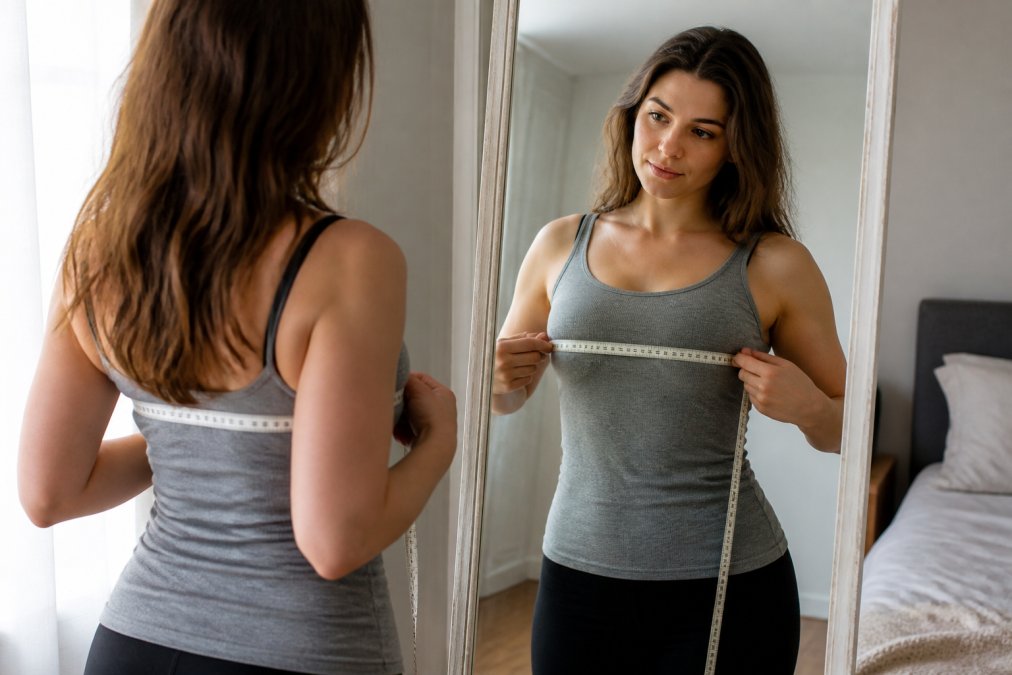
Write these four numbers down and take a photo of your measurements. These numbers are your reference point for every size chart you encounter.
Using a Measuring Tape Effectively
Hold the tape gently, not tight enough to compress your skin, but not so loose it sags. The tape should lie flat against your body without twists or gaps. Use a mirror to check that the tape is parallel to the ground, not angled up or down.
Measure twice and write down both measurements. If they differ by more than a quarter inch, measure a third time. Consistency matters because you're comparing these numbers to garment dimensions that may only vary by a half inch between sizes.
How to Read a Garment Size Chart Like an Expert
A clothing size chart is a table that shows the actual dimensions of a garment at each size level. It's not about what size you "usually wear", it's about whether the garment's measurements match your body measurements.
Find the chart before you buy. Most online retailers place it near the size selector, labeled "Size Guide," "Fit Guide," or "Measurements." If you can't find it, that's a red flag.
Look for these columns: bust, waist, hip, length (for dresses), or inseam (for pants). Compare each measurement to your body measurement. If the garment's bust is 38 inches and your bust is 36 inches, you have 2 inches of ease, which is usually comfortable for a fitted style.
A "medium" at one brand might be 36 inches across the bust. At another brand, a medium might be 38 inches. This is why reading the actual numbers matters more than trusting the size label.
Understanding Retailer Specifications and Fit Guides
Some retailers publish fit guides that describe how a garment is intended to fit. A fit guide might say "this dress is designed for a relaxed fit through the body" or "these pants are cut slim through the thigh." This context helps you interpret whether the measurements will feel right.
A fit guide might also describe fabric composition and how it behaves. A cotton dress will fit differently than a polyester dress of the same dimensions because cotton has less stretch. A good retailer mentions whether fabrics shrink.
Hot Possessions & Glitter Girls publishes detailed fit guides alongside size charts because accurate sizing requires both the numbers and the context.
Identifying Vanity Sizing and Size Variance Across Brands
Vanity sizing is when a brand labels a garment with a smaller size than its actual measurements would suggest. A dress with a 38-inch bust might be labeled a "small" instead of a "medium." This destroys consistency.
Size variance is the reality of fashion retail. A size 8 at one brand is not the same as a size 8 at another brand. Different manufacturers use different patterns, factories, and quality control standards. The same brand's different product lines might also vary.
The only defense against vanity sizing and size variance is comparing your body measurements to the garment's actual dimensions. Ignore the label. Trust the numbers.
Tips for Buying Plus Size Clothes Online with Confidence
Shopping for plus size clothing online carries extra risk because fit consistency is critical. A small error in measurement or a brand's inconsistent sizing can mean the difference between a garment that fits beautifully and one that doesn't work.
Start with retailers that specialize in extended sizes. These brands invest in fit testing across size ranges and understand that a size 2XL customer has different proportions than a size L customer.
Check the return policy before you buy. Can you return items that don't fit? Do you have to pay return shipping? A generous return policy is a sign the brand is confident in its sizing accuracy.
Why Plus Size Fit Consistency Matters
When sizing runs inconsistently, the problem compounds at larger sizes. A half-inch difference in bust measurement might be imperceptible in a size small. In a size 2XL or 3XL, that same half-inch difference can determine whether something fits or gaps at the buttons.
Plus size clothing also needs different design proportions. A dress designed for a size 4 and scaled up to a size 18 will have proportional issues, the armhole might be too high, the waist might sit in the wrong place, or the length might be off. Brands that design specifically for plus sizes account for these differences.
Comparing Standard, Petite, and Plus Size Options
Standard sizing assumes an average height of about 5'4" to 5'8" (the FTC). Petite sizing shortens the inseam and reduces the overall length of dresses and tops. Plus size sizing extends measurements across the bust, waist, and hip while maintaining the intended length and proportions.
Some retailers offer multiple size ranges. Hot Possessions & Glitter Girls carries women's wear, juniors, and girls' clothing, each with appropriate sizing for different body types and proportions. A 5'2" woman might find better proportions in petite sizing than standard.
Understanding Why Clothing Sizes Differ by Brand and Country
Clothing size standards exist, but they're not universally enforced. The United States uses numerical sizing (0, 2, 4, 6, 8, etc.) for women's clothing (nist.gov). Europe uses letter sizing (XS, S, M, L, XL). Some countries use centimeters for garment measurements; others use inches.
Within the United States, there's no federal mandate requiring retailers to follow a specific sizing standard. This is why brands can vary so widely. A size 8 at one brand might be the equivalent of a size 10 at another.
Imported clothing often uses different sizing standards than domestic brands. A dress imported from Europe might use European sizing that doesn't correspond directly to standard U.S. sizing. A garment made in Asia might use Asian sizing standards, which tend to run smaller than U.S. sizing.
Without a size chart, you have no way to know which approach a brand uses.
Finding Reliable Size Charts: What to Look For
A reliable size chart lists actual garment measurements, not just size labels. It includes all relevant dimensions: bust, waist, hip, length, inseam, sleeve length, or shoulder width, depending on the garment type.
The measurements should be in inches (for U.S. retailers) or clearly labeled with units. A size chart that says "bust: 36" without specifying inches is ambiguous.
A reliable size chart is easy to find before you commit to buying. It should be visible on the product page without clicking through multiple links. The chart should include a model's height and size so you can see how the garment actually fits on a real body.
Red Flags That Signal an Unreliable Size Chart
A size chart that only lists size labels ("small," "medium," "large") without actual measurements is useless. You can't compare your body to a label.
A chart that uses vague measurements like "fits most people" or "generous sizing" means the brand hasn't actually measured the garments.
A retailer that doesn't publish a size chart at all is the biggest red flag. If a brand won't tell you the dimensions of its clothing, either the sizing is inconsistent or the brand doesn't care about accuracy.
A chart that's outdated, showing styles no longer available or sizes that have changed, suggests the retailer doesn't maintain its sizing information carefully.
Fabric Composition Impact on Fit and Sizing
The fabric a garment is made from changes how it fits and how sizing works. A 100% cotton dress will fit differently than a polyester blend, even if both garments have identical measurements.
Natural fabrics like cotton, linen, and silk tend to have less stretch and may shrink after washing (peer-reviewed research). Synthetic fabrics like polyester and nylon have more give and often don't shrink.
Stretchy fabrics (spandex, elastane, or lycra blends) allow more movement and can accommodate a wider range of body shapes within a single size. A reliable size chart mentions fabric composition and how it affects fit.
Using Size Calculators and Conversion Tools
Some retailers offer size calculators that ask for your measurements and recommend a size. These tools can be helpful if they're based on that retailer's actual size charts.
Be skeptical of calculators that claim to work across multiple brands. No calculator can account for the massive variation in sizing across retailers.
Size conversion tools that convert between U.S. sizing and European or Asian sizing are useful for imported clothing, but always check the specific retailer's size chart because imports vary widely.
The most reliable tool is your own measurements compared directly to a retailer's published size chart.
What to Do When Your Measurements Fall Between Two Sizes
Sometimes your measurements suggest you're between sizes. Your bust might fit a medium, but your hips fit a large.
Start by identifying which measurement matters most for that specific garment. For a fitted dress, hip measurement usually matters most. For a top, bust measurement is usually the deciding factor. For pants, inseam is non-negotiable.
Consider the garment's fit description. A dress designed for a relaxed fit can accommodate slightly larger measurements than a fitted dress. A top with stretch in the fabric can accommodate variation that a 100% cotton top cannot.
Check the return policy. If returns are free and easy, ordering both sizes and returning the one that doesn't fit is reasonable. Look at customer reviews and photos, real customers often post photos of how garments fit on their bodies.
When in doubt, size up. A garment that's slightly too large can often be tailored or worn with confidence. A garment that's too small is usually unwearable.
Finding accurate clothing size charts online is the foundation of successful online shopping. What matters is comparing your actual body measurements to the garment's actual dimensions. A reliable retailer publishes detailed size charts, explains how fabric affects fit, and makes returns easy if something doesn't work out.
At Hot Possessions & Glitter Girls, every product includes a detailed size chart and fit guide because accurate sizing is non-negotiable. With over 4,000 apparel items for women, juniors, and girls, consistency matters. Free shipping on orders over $150 and flexible payment options like Afterpay and Klarna make it easy to shop with confidence. If a garment doesn't fit the way the size chart promised, Hot Possessions & Glitter Girls makes returns straightforward so you can find your perfect size.
Frequently Asked Questions
How do I get accurate measurements for clothes when shopping online?
Wear fitted clothing or undergarments, use a soft measuring tape, and measure loosely without pulling tight. Measure your bust at the fullest point, waist at the narrowest point, hips at the widest point, and inseam from your inner thigh to your ankle. Write measurements down and compare them directly to the retailer's size chart before ordering. Remeasure every few months, as body measurements can shift.
Why do clothing sizes vary so much between different brands?
Vanity sizing, manufacturing standards, and target market differences cause size variance across brands. A size 8 at one retailer may fit differently than a size 8 elsewhere. International sizing conventions, fabric composition, and garment design all contribute to fit inconsistency. Always consult the specific retailer's size chart rather than relying on your usual size label, especially when shopping at unfamiliar stores.
What should I do if my measurements fall between two sizes on a garment size chart?
If your bust or waist falls between sizes, choose the larger size if the garment is fitted or stretchy fabric. For looser styles, either size works. Check the specific fit guide description to understand how that style runs. Consider the fabric composition: natural fibers like cotton may shrink, while synthetic blends stay more consistent. Read customer reviews mentioning fit to see if others sized up or down for that particular item.
How can I tell if a size chart is reliable when buying plus size clothes online?
Reliable size charts include specific measurements in inches for bust, waist, and hip circumference, not just size labels. Look for retailers that offer standardized sizing across their collection and provide fit guides describing whether items run small, true to size, or large. Check customer reviews and photos from real shoppers wearing the clothes. Retailers with transparent returns and fit-guarantee policies demonstrate confidence in their sizing accuracy.
This article was written using GrandRanker